
If you’ve started a blog, a small business website, or a content strategy, you’ve probably heard that “keyword research” is where everything begins. It’s also one of the most intimidating parts of SEO for beginners the terminology alone (volume, difficulty, intent, seed keywords) can feel like a foreign language.
The good news: keyword research isn’t complicated once you understand it as a process rather than a pile of disconnected tips. This tutorial walks you through that process step by step, using free tools, so you can start finding and evaluating keywords today even with zero prior SEO experience.
What Is Keyword Research and Why It Matters
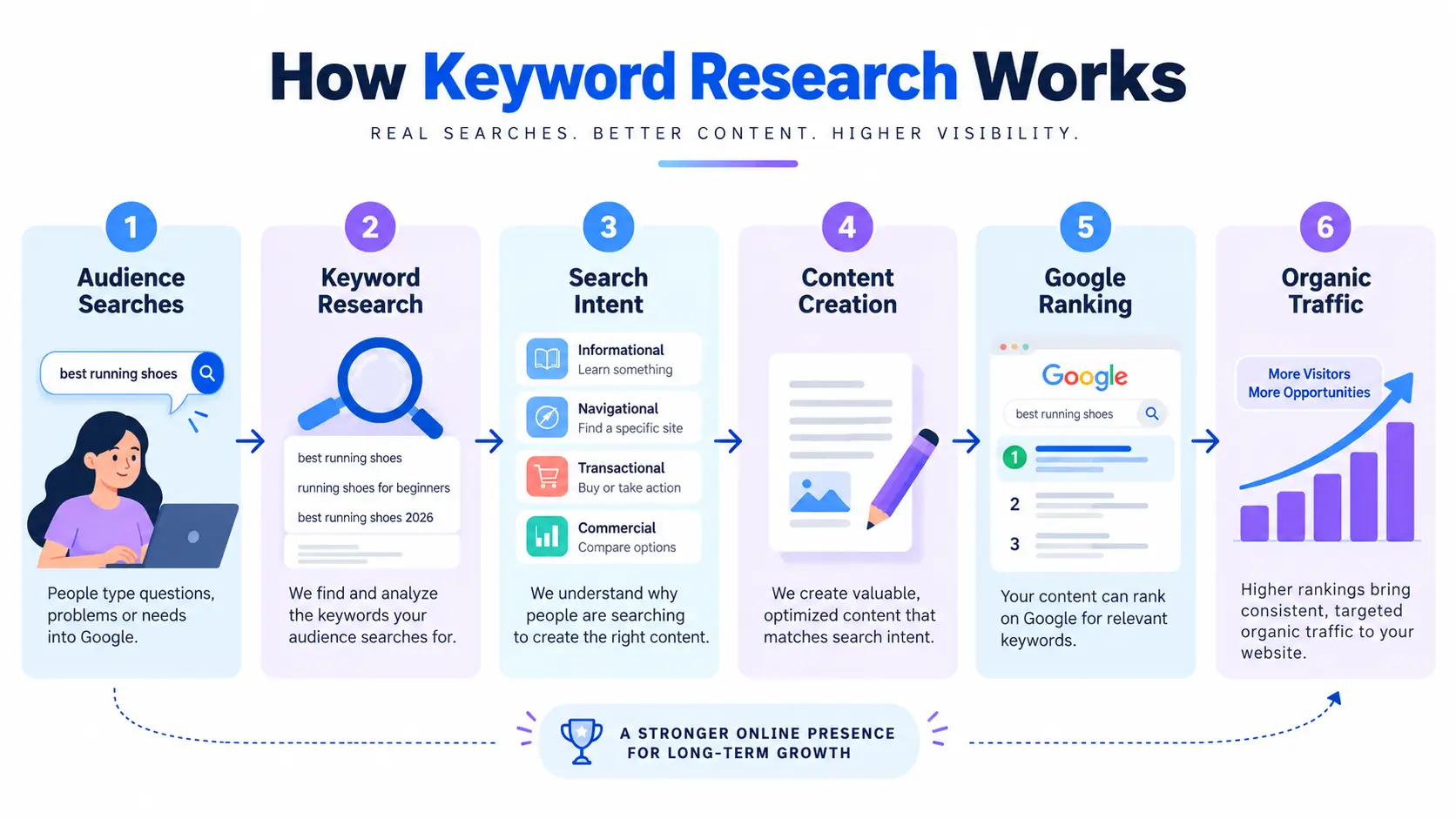
At its core, keyword research means digging into the actual search terms your audience types into Google, then using that insight to shape what you write. Instead of guessing at topics, you build content around proven demand—the specific language real people use when they’re looking for answers.
How Keyword Research Fits Into SEO
Every other part of SEO your page titles, headings, content structure, internal links depends on knowing which keywords you’re targeting first. Skip this step, and you’re essentially guessing at what to write about, hoping it happens to match real search demand.
What Happens If You Skip Keyword Research
Without keyword research, it’s common to publish content that either has no search demand at all, or that competes head-on with massive, established websites you have no realistic chance of outranking. Both outcomes waste time. Keyword research helps you avoid both traps by showing you what people actually search for and how competitive that search term is before you write a single word.
Key Terms Every Beginner Should Know
A handful of terms show up constantly in keyword research. Once you know them, the rest of this tutorial will make much more sense.
Search Volume, Difficulty, and Intent Explained
- Search volume is how many times a keyword is searched per month.
- Keyword difficulty is a score estimating how hard it would be to rank on page one for that term.
- Search intent is why someone is searching what they want to find when they type that phrase.
These three factors work together. A keyword might have huge volume but be nearly impossible to rank for; another might have modest volume but be easy to win and highly relevant to your audience.
Seed Keywords, Long-Tail, and Head Terms
A seed keyword is a broad starting term (like “coffee”) that you expand into more specific ideas. Head terms are short, broad, high-competition phrases (“running shoes”). Long-tail keywords are longer, more specific phrases (“best waterproof running shoes for winter”) lower volume individually, but easier to rank for and often closer to what the searcher actually wants.
Step 1 – Understand Search Intent First
Before you chase volume numbers, figure out why someone searches a given term. This single habit will save you from writing the wrong kind of content for the right keyword.
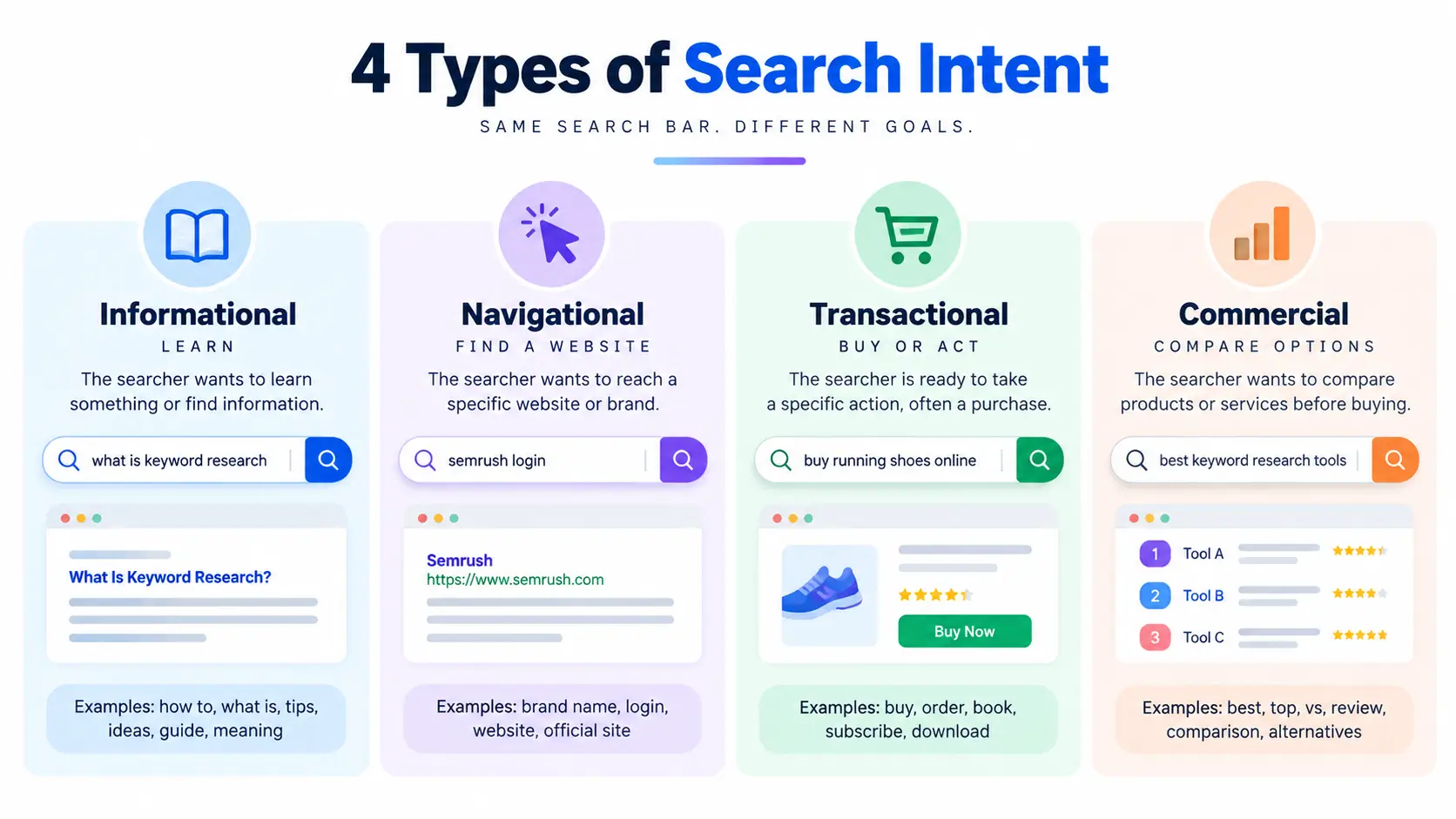
Informational vs. Navigational vs. Transactional vs. Commercial
- Informational: the searcher wants to learn something (“what is keyword research”)
- Navigational: they want a specific website (“Ahrefs login”)
- Transactional: they’re ready to buy (“buy running shoes online”)
- Commercial: they’re comparing options before buying (“best keyword research tools”)
How to Spot Intent From the Google Results Page
The fastest way to check intent is to search the keyword yourself and look at what’s already ranking. If the top results are all product pages, that’s a transactional or commercial keyword. If they’re blog posts and guides, it’s informational. Match your content format to what’s already succeeding fighting the established intent pattern rarely works.
Step 2 – Brainstorm Seed Keywords
Every keyword list starts with a handful of broad seed terms related to your topic or business.
Mining Your Own Niche Knowledge
Start with what you already know. If you run a coffee blog, seed terms might include “cold brew,” “espresso machines,” or “coffee beans.” List everything your audience would plausibly search for related to your niche; don’t filter yet, just brainstorm.
Checking Competitor Content for Ideas
Look at two or three competitor websites in your space and note the topics they cover. Their blog categories, navigation menus, and top-performing pages are a free source of seed keyword ideas you might not have thought of on your own.
Step 3 – Expand Your List With Free Tools
Once you have seed keywords, expand each one into dozens of related variations using free tools.
Google Autocomplete & “People Also Ask”
Type a seed keyword into Google and note the autocomplete suggestions these are real queries other people search. Scroll down to the “People Also Ask” box for a list of related questions, which double as potential subheadings for your content.
Google Keyword Planner (Free Tier)
Google Keyword Planner is free with any Google Ads account, even without running active campaigns. Enter your seed keywords to get related keyword ideas and broad search volume ranges a solid starting point, even though the ranges aren’t as precise as paid tools.
Google Trends
Google Trends shows whether interest in a keyword is rising, falling, or seasonal. This helps you avoid investing time in a declining topic and spot emerging ones early.
AnswerThePublic
AnswerThePublic pulls autocomplete data and visualizes it as questions, prepositions, and comparisons people search around your seed term useful for uncovering long-tail, conversational keyword ideas.
Step 4 – Evaluate Keywords: Volume, Difficulty, and Intent Together
With a long list in hand, it’s time to narrow down to the keywords worth targeting.
Why High Volume + High Difficulty Is a Trap for New Sites
It’s tempting to chase the biggest, most searched keyword in your niche. But if a term is dominated by high-authority, established domains, a new site has little realistic chance of ranking on page one no matter how good the content is. Favor keywords you can actually compete for, even if the volume is smaller.
A Simple Scoring Method for Prioritizing Keywords
For each keyword, ask three questions: Is it relevant to what I actually offer? Is the volume worth the effort? Can I realistically rank for it given my site’s current authority? Keywords that score well on all three especially specific, long-tail terms are your best early targets.
Step 5 – Group Keywords Into Topic Clusters
Instead of treating each keyword as its own isolated idea, group related keywords into clusters that map to a single page.
Mapping One Cluster to One Page
If you have ten keywords that all relate to “how to make cold brew coffee,” they likely belong on one comprehensive page rather than ten thin, separate posts. Search engines reward depth on a topic far more than a scattering of shallow pages targeting slightly different phrasings of the same idea.
Avoiding Keyword Cannibalization
Keyword cannibalization happens when two pages on your own site compete for the same keyword, splitting your ranking potential instead of combining it. Before publishing something new, check whether an existing page on your site already targets that keyword if so, update that page instead of creating a duplicate.
Step 6 – Turn Keywords Into a Content Plan
Research only pays off once it becomes action. This is the step most beginner guides skip.
Prioritizing “Quick Win” Keywords
Start with keywords that combine decent relevance, modest competition, and clear intent match these are your fastest path to real rankings while your site builds authority. Save the bigger, more competitive terms for later once you have some traction.
Building a Simple Content Calendar
Take your prioritized keyword clusters and assign one to each upcoming piece of content, spaced out on a calendar. Even a simple spreadsheet with a keyword, target page, and publish date turns your research into a concrete, trackable plan instead of a list that never gets used.
Common Keyword Research Mistakes Beginners Make
Chasing Volume Over Relevance
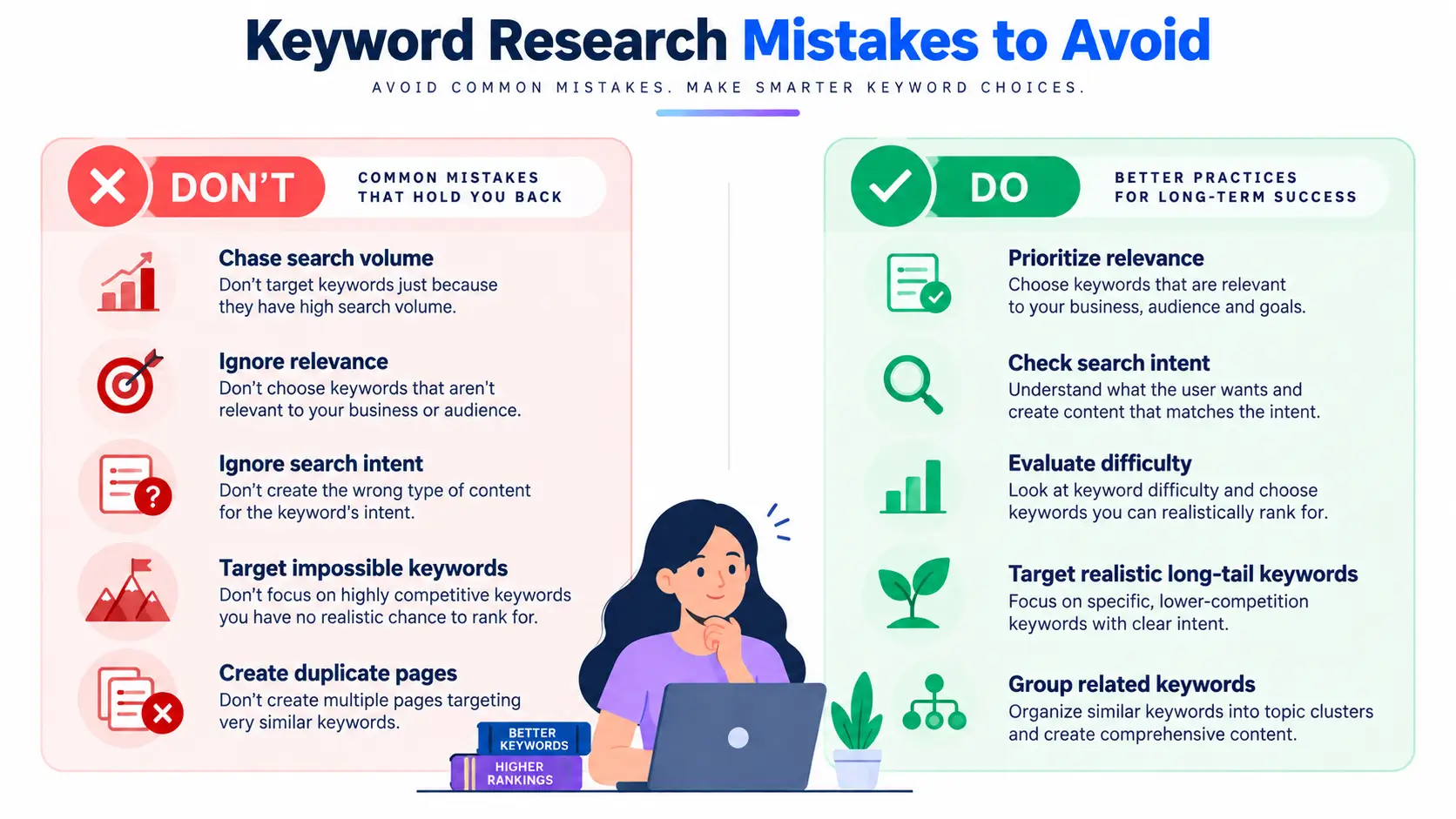
A keyword with huge search volume is worthless if it doesn’t match what your website actually offers. High traffic that doesn’t convert or engage isn’t a win relevance should always outrank raw volume in your decision-making.
Ignoring Search Intent Mismatches
Writing a blog post for a keyword that Google clearly treats as transactional (product pages dominate the results) is one of the most common beginner mistakes. Always check what’s currently ranking before committing to a content format.
Frequently Asked Questions
What is keyword research in SEO?
Keyword research is the process of finding and analyzing the words and phrases people type into search engines, so you can create content that matches what they’re actually searching for. It connects audience demand to the topics and pages on your website, forming the foundation of any SEO strategy.
How do I start keyword research as a complete beginner?
Start by listing “seed keywords” broad terms related to your topic based on what you already know about your audience. Then expand that list using free tools like Google Autocomplete, Google Keyword Planner, and Google Trends before narrowing down by intent and difficulty.
What is a good keyword difficulty score for beginners to target?
Beginners with newer websites generally have the best luck with low-to-moderate difficulty keywords, since high-difficulty terms are dominated by established, high-authority sites. Focus on long-tail, specific phrases first they’re easier to rank for and often convert better anyway.
Is Google Keyword Planner free to use for keyword research?
Yes, Google Keyword Planner is free to use with any Google Ads account, even if you don’t run active ad campaigns. It shows keyword ideas and broad search volume ranges, though the data is less precise than in paid tools like Ahrefs or Semrush.
What’s the difference between short-tail and long-tail keywords?
Short-tail (head) keywords are broad, one- or two-word terms like “shoes” high volume, very competitive. Long-tail keywords are longer, more specific phrases like “best waterproof running shoes for winter” lower volume, but easier to rank for and closer to purchase or action intent.
How many keywords should one blog post target?
One blog post should target one primary keyword, supported by several related secondary and LSI keywords that reinforce the same topic. Trying to rank a single page for many unrelated keywords dilutes focus and hurts relevance signals.