Social media has become one of the most powerful ways for businesses to connect with customers, build brand awareness, and drive sales. Whether you’re a student, entrepreneur, or marketing beginner, understanding social media marketing is the first step toward creating an effective online presence. In this guide, you’ll learn what social media marketing is, how it works, its different types, key benefits, essential skills, and practical steps to get started with confidence.
What Is Social Media Marketing?
Social media marketing is the practice of using platforms like Instagram, Facebook, TikTok, LinkedIn, and X to promote a brand, connect with an audience, and reach business goals. It usually involves three things: sharing content, talking with followers, and sometimes running paid ads.
In simple terms, the social media marketing definition boils down to this: it’s how businesses show up where people already spend their time, and use that presence to build awareness, trust, and eventually sales.
The one-sentence version: Social media marketing is using social platforms to build relationships with an audience and turn that attention into business results.
You don’t need a huge budget or a marketing degree to get started. Many successful accounts begin with nothing more than a phone camera, a free platform account, and a willingness to post consistently and learn from what works.
How Does Social Media Marketing Work?
At its core, social media marketing follows a simple, repeatable cycle. Once you understand it, every platform and tactic starts to make more sense.
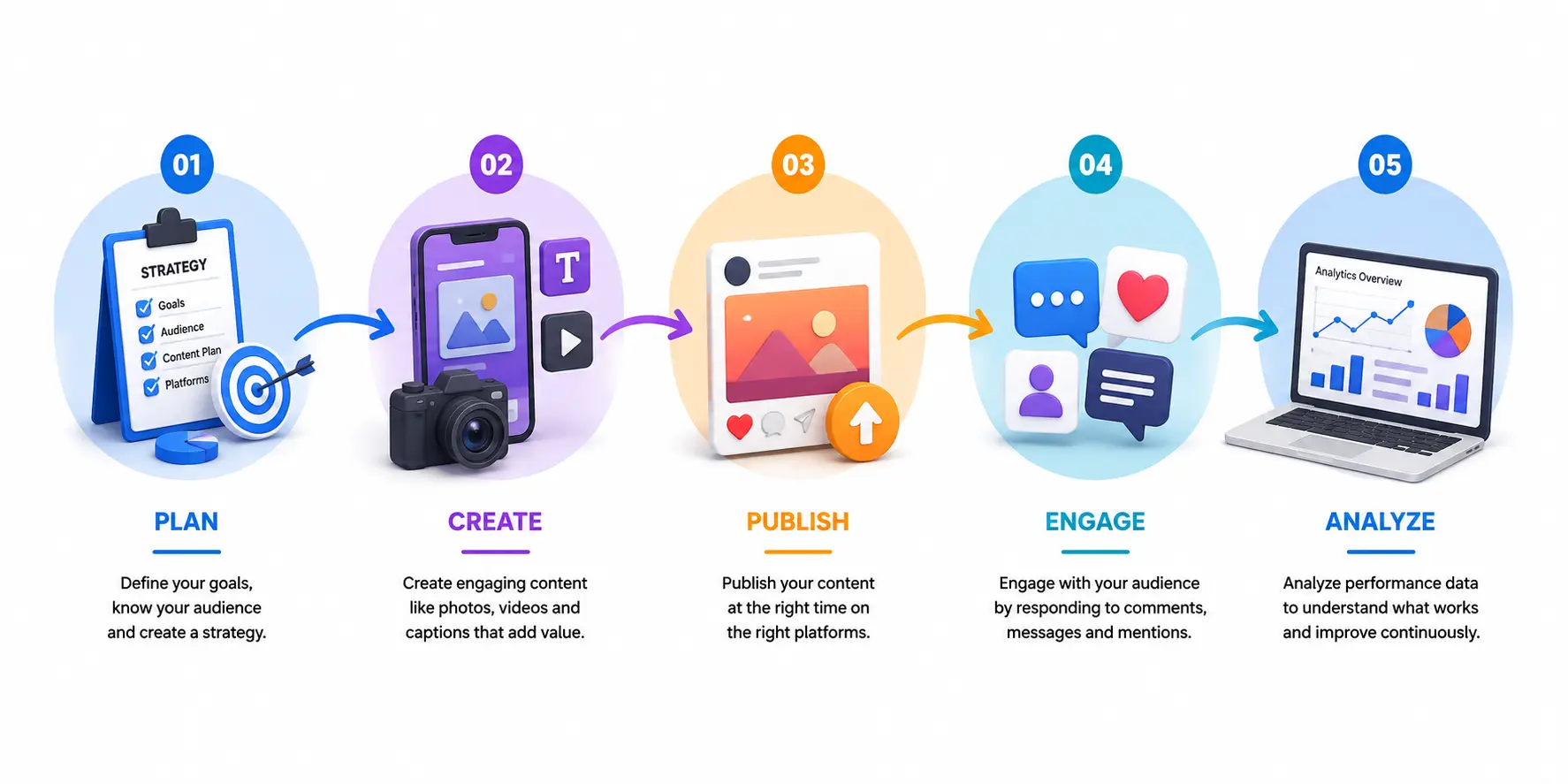
The Basic Cycle: Plan, Create, Publish, Engage, Analyze
First, you plan what you want to say and who you’re saying it to. Then you create the content: a photo, video, or written post. Next, you publish it at a time your audience is likely to see it. After that, you engage by replying to comments and messages. Finally, you analyze what worked, using simple metrics like likes, shares, or clicks, so the next round of content is better.
Organic vs. Paid Social Media Marketing
Organic social media marketing means posting content for free and letting it reach people naturally through follows, shares, and the platform’s algorithm. Paid social media marketing means paying the platform to show your content to a specific, targeted audience, even people who don’t already follow you. Most brands use a mix of both.
Why Social Media Marketing Matters
Benefits for Businesses
The benefits of social media marketing go well beyond simply “getting likes.” It helps businesses build brand awareness among people who’ve never heard of them, build trust by showing up consistently and responding to questions, drive traffic back to a website or store, and generate sales through both organic posts and paid campaigns. It also acts as a live customer service channel; many customers now message brands directly instead of calling.
Social Media Marketing vs. Traditional Marketing
Traditional marketing like TV ads, billboards, or print flyers talks at an audience, is expensive to test, and offers little direct feedback. Social media marketing, on the other hand, is a two-way conversation. It’s usually cheaper to start, easier to measure, and lets a business adjust its message in real time based on how people respond.
The Main Types of Social Media Marketing
There isn’t just one way to do social media marketing. Most brands combine a few of the following types of social media marketing to get the best results.
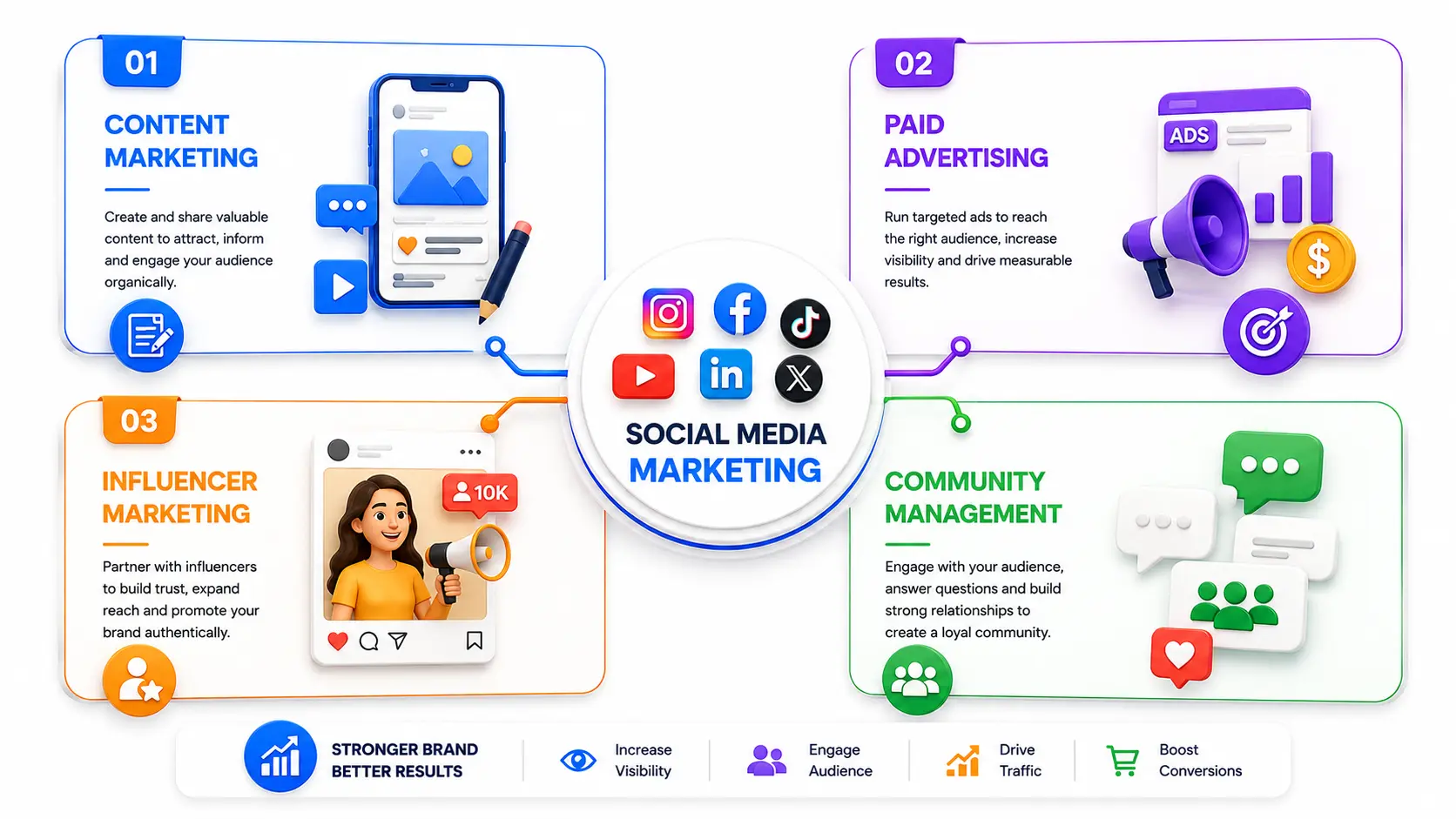
Content Marketing on Social
This is the free, organic side of social media: photos, videos, stories, and posts shared to inform, entertain, or connect with an audience without directly paying for reach.
Paid Social Advertising
Paid ads let businesses target very specific audiences by age, location, interests, or behavior and appear in front of people beyond their existing followers.
Influencer Marketing
This involves partnering with people who already have an engaged audience, so their followers hear about a brand through someone they already trust.
Community Management & Social Customer Care
This is the ongoing work of replying to comments, answering direct messages, and handling customer questions or complaints publicly and privately on social platforms.
What Skills Do You Need for Social Media Marketing?
You don’t need to master every skill on day one, but a few will make the learning curve much easier. Basic writing skills help you craft captions people actually want to read. A bit of comfort with photo or video editing, even using free phone apps, goes a long way, since visuals are what stop someone from scrolling past. Understanding your audience matters more than any technical skill, because content only works if it speaks to the people you’re trying to reach. And finally, a willingness to read simple analytics like likes, shares, comments, click-throughs helps you learn from every post instead of guessing.
Consistency and curiosity matter more than perfection. Platforms and trends change constantly, so beginners who keep experimenting and adjusting tend to improve faster than those waiting to “get it right” before posting.
Popular Platforms for Social Media Marketing
Not every social media platform for marketing fits every business. Here’s a quick, beginner-friendly snapshot:
- Instagram — best for visual brands: photos, short videos, and behind-the-scenes content.
- TikTok — best for short, entertaining video content and reaching younger audiences.
- Facebook — best for community groups, local businesses, and a wide age range.
- LinkedIn — best for B2B marketing, professional services, and career-focused content.
- X (formerly Twitter) — best for real-time updates, news, and customer conversations.
- Pinterest — best for products, inspiration, and content that drives long-term website traffic.
How to Get Started with Social Media Marketing (Step-by-Step)
Step 1 — Define Your Goals and Audience
Before posting anything, decide what success looks like: more brand awareness, more website visits, or more direct sales, and get clear on exactly who you’re trying to reach. Write down basic details about your ideal follower or customer: their age range, interests, and the problems they’re trying to solve. This makes every later decision, from platform choice to content style, much easier.
Step 2 — Choose the Right Platforms
As a beginner, resist the urge to be everywhere at once. Pick one or two platforms where your target audience already spends time, and focus your energy there first. It’s better to post consistently and do well on one platform than to spread yourself thin and do poorly on five.
Step 3 — Create a Content Plan
Map out what you’ll post and how often; even a simple weekly plan helps. A basic mix might include educational posts, behind-the-scenes content, and the occasional promotional post. Consistency matters more than perfection when you’re just starting out; a simple, regular post will usually outperform an occasional, highly polished one.
Step 4 — Post, Engage, and Track Results
Publish consistently, reply to comments and messages promptly, and check basic metrics regularly to see what your audience responds to best, then do more of that. Most platforms offer free, built-in analytics, so you don’t need to buy expensive tools to get started; those can come later, once you understand what’s already working.
Real-World Examples of Social Media Marketing
A local coffee shop posting daily photos of new drinks and tagging its location is using organic content marketing; this builds a loyal, local following over time without spending a cent. An online clothing store running a targeted Instagram ad to people who visited its website but didn’t buy is using paid social advertising to bring back interested shoppers. A skincare brand sending free products to a beauty creator in exchange for an honest review is using influencer marketing to reach an audience that already trusts that creator’s opinion. And a software company replying to every comment and support question on X is using community management to build trust and resolve issues in public.
Notice that none of these examples require a huge budget or a large team; they simply require a clear goal and consistent effort. Most successful brands blend several of these approaches at once rather than relying on just one.
Common Social Media Marketing Mistakes Beginners Make
- Trying to be active on every platform at once, instead of starting small and doing one platform well.
- Posting inconsistently, then disappearing for weeks; this confuses the algorithm and followers alike.
- Only talking about the brand instead of engaging with followers and joining real conversations.
- Ignoring comments and messages, which quietly damages trust even if no one complains publicly.
- Not tracking metrics means the same mistakes continue to happen instead of being fixed and improved.
- Treating social media like a one-way billboard instead of a two-way conversation.
Frequently Asked Questions
What does social media marketing mean?
Social media marketing is the practice of using platforms like Instagram, Facebook, and TikTok to promote a brand, connect with an audience, and drive business goals such as awareness, engagement, or sales. It combines content creation, community engagement, and sometimes paid advertising.
What are the main types of social media marketing?
The main types are organic content marketing, paid social advertising, influencer marketing, and community management. Most brands blend several types, using organic posts to build relationships and paid ads to expand reach and drive specific actions.
Why is social media marketing important for a business?
It helps businesses build brand awareness, connect directly with customers, drive website traffic, and generate sales, often at lower cost than traditional advertising. It also provides real-time customer feedback and a public space to build trust and credibility.
How do beginners start with social media marketing?
Start by defining clear goals and identifying your target audience. Choose one or two platforms where that audience is active, create a simple content plan, post consistently, engage with comments, and review basic metrics to see what resonates.
What’s the difference between social media marketing and digital marketing?
Digital marketing is the broader umbrella, including SEO, email, and paid search. Social media marketing is one specific channel within that umbrella, focused exclusively on activity across social platforms like Instagram, LinkedIn, and TikTok.
How much does social media marketing cost?
Costs vary widely. Organic social media marketing can be free aside from time investment, while paid social ads can start from just a few dollars a day. Businesses using tools or agencies typically spend anywhere from $200 to several thousand dollars monthly.
Conclusion
Social media marketing isn’t complicated once you break it down: pick the right platforms, plan your content, post consistently, engage with your audience, and learn from what the numbers tell you. Every big brand you follow today started with a single post and an audience of zero, so there’s no wrong time to begin.
Reading about social media marketing can only take you so far; real progress comes from hands-on practice with proper guidance. If you’re in Kerala and want to turn this knowledge into a job-ready skill, enroll in a digital marketing course in Trivandrum. A structured course will walk you through live social media campaigns, content strategy, paid advertising, and analytics with mentors who can answer your questions in real time and help you build a portfolio employers actually notice.


Pingback: How To Optimize Your Social Profiles As Social Search Engine
Pingback: Pinterest Marketing In 2026: A Complete Beginner’s Guide