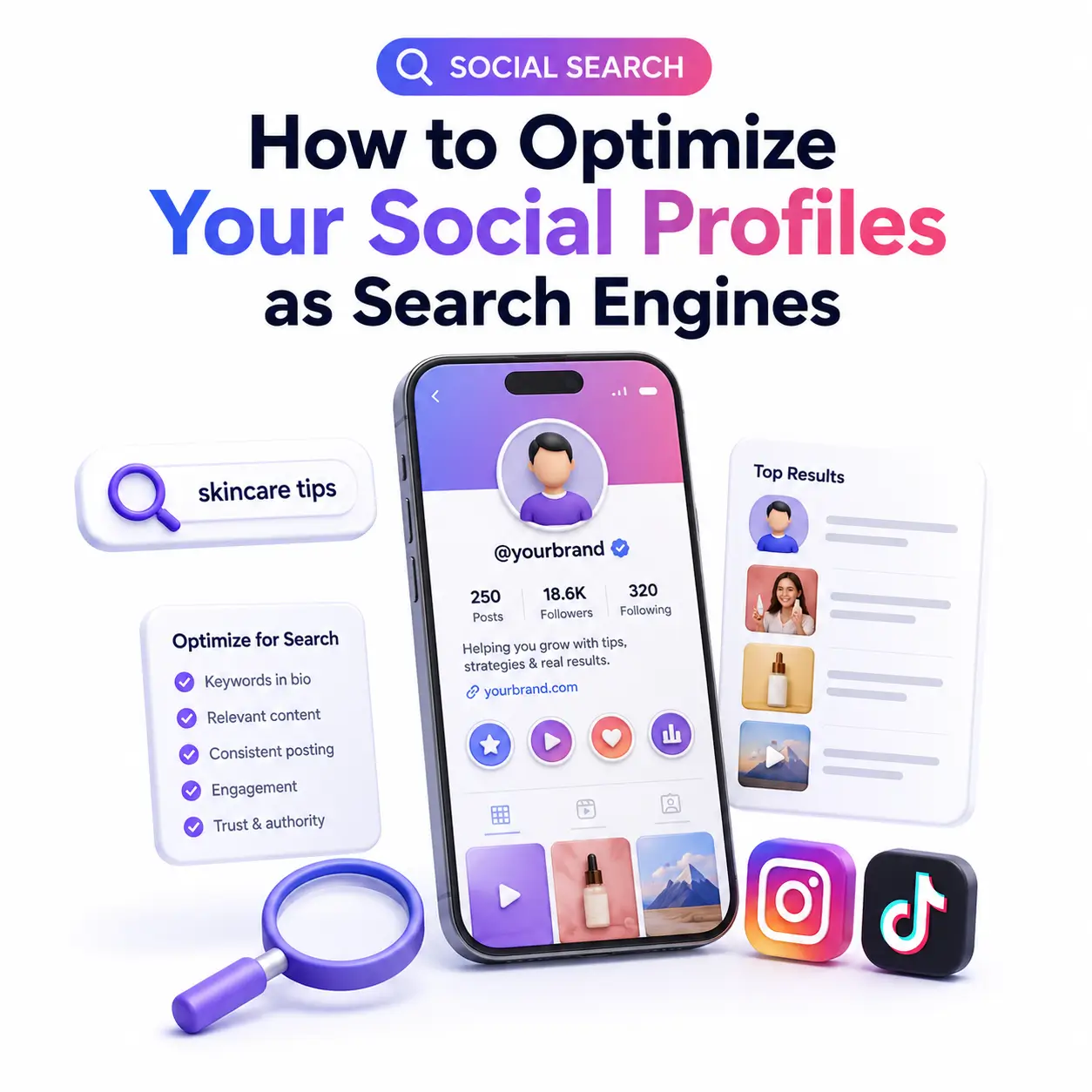
If you’ve noticed yourself typing questions into Instagram or TikTok instead of Google lately, you’re not imagining things and you’re not alone. This shift has a name: social search. And if you have a business, a personal brand, or even just a public profile you want people to find, it changes how you should think about your social media presence.
This guide breaks down what social search actually is, why it’s happening, and exactly how to optimize your profiles so people can find you when they search no marketing degree required.
What Is Social Search?
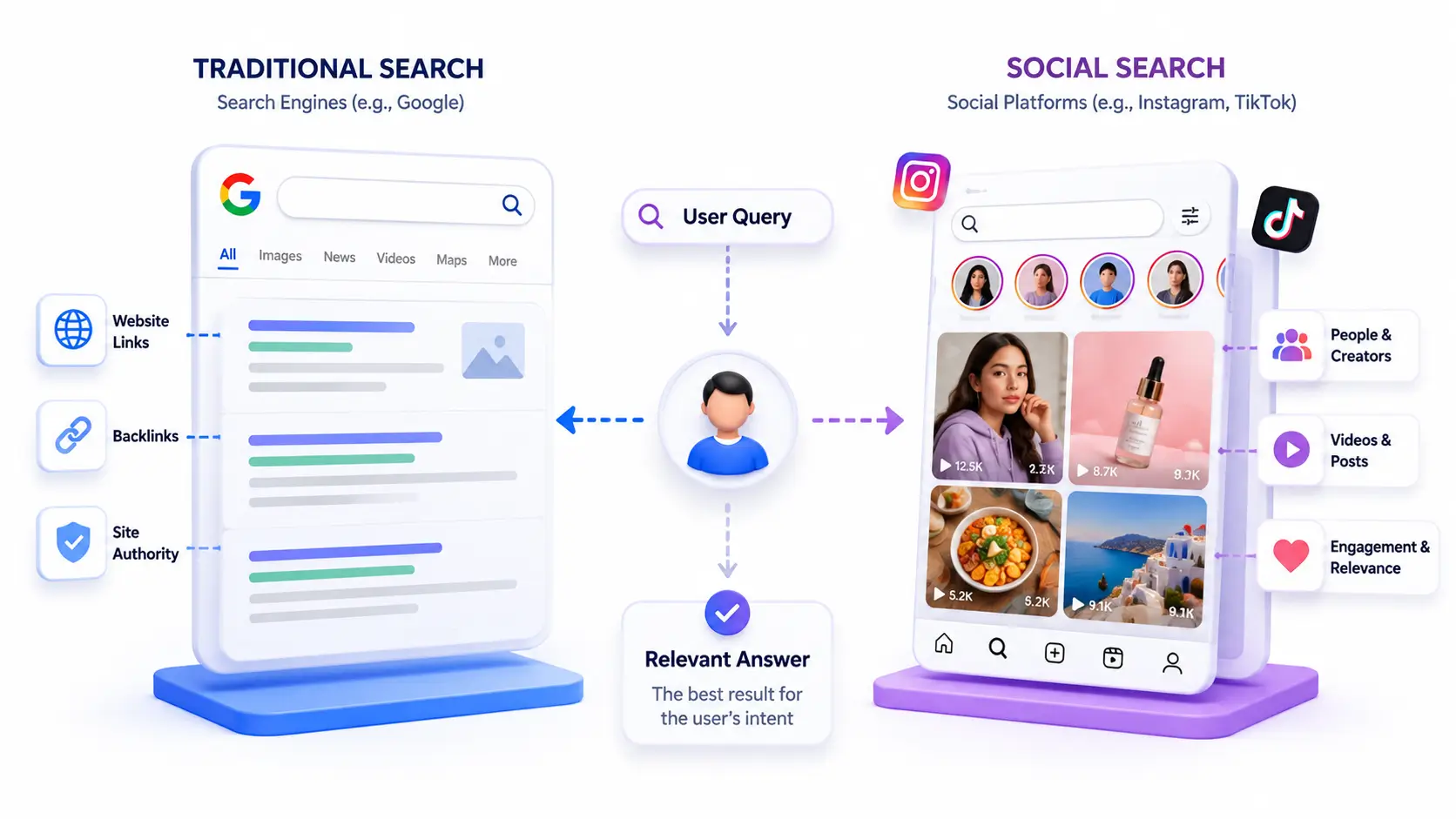
Social search is the practice of using a social media platform’s built-in search bar to find information, rather than opening Google or another traditional search engine. Instead of googling “best budget-friendly skincare routine,” someone might type that same question directly into TikTok or Instagram and scroll through creator videos and posts that answer it.
The key difference is intent and format. Traditional search engines return links to websites. Social SEO returns people, videos, and posts often more visual, more personal, and more immediate. In both cases, though, the underlying goal is the same: the user has a question, and they want the platform to surface the best answer.
Social SEO vs. Traditional Search Engines
Think of it this way: Google indexes the web and ranks pages based on signals like backlinks, site authority, and content relevance. Social platforms index profiles and posts, and rank them based on signals like keywords, engagement, and how active and complete a profile is. The mechanics are different, but the underlying principle be relevant, be discoverable, be trustworthy carries over.
Why Social Search Matters Now
For years, headlines have claimed that younger users are “abandoning” Google entirely in favor of TikTok and Instagram. The real picture is more nuanced and more useful for anyone trying to build a strategy around it.
How Gen Z and Younger Users Search Differently
Recent data paints a picture of parallel search behavior rather than wholesale replacement. <cite index=”13-1″>An analysis based on GWI data found that 67% of Gen Z use Instagram for search, 62% use TikTok, and 61% use Google nearly identical shares across all three platforms</cite>. In other words, this isn’t really about one platform beating another. It’s about people picking the right search tool for the type of question they’re asking.
Someone researching a visual, discovery-driven question “what does this product actually look like on real skin?” is more likely to reach for TikTok or Instagram. Someone with a factual, high-stakes question tax deadlines, medical information, legal definitions is still far more likely to reach for Google. This is often described as query-type segmentation: users aren’t loyal to one search engine, they’re routing different kinds of questions to whichever platform answers that kind of question best.
What This Means for Brands and Individuals
If your audience is asking discovery-type questions about your niche “best coffee shop near me,” “how do I style this,” “is this worth buying” and your social profile isn’t optimized to show up in that search, you’re invisible for exactly the queries most likely to bring you new followers, customers, or clients. Optimizing for social SEO isn’t about abandoning traditional SEO; it’s about meeting your audience on whichever platform they’re already using to ask that particular kind of question.
How Social Platforms Rank Profiles and Content
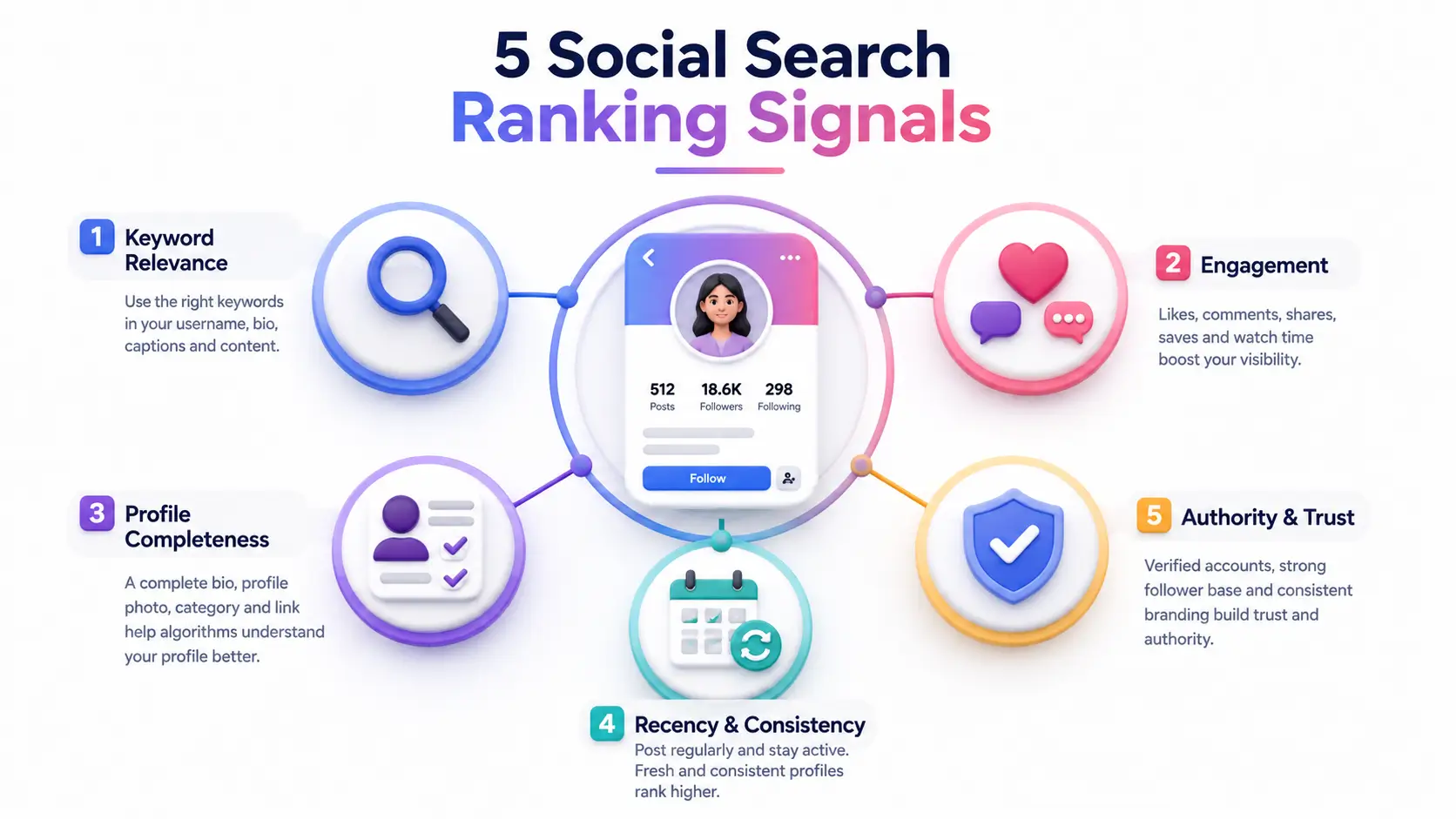
Every platform has its own algorithm, but most social media marketing systems weigh a similar handful of signals when deciding what to surface for a given query.
Common Ranking Signals Across Platforms
- Keyword relevance: does your username, bio, captions, or on-screen text match the words people are actually searching?
- Engagement: likes, comments, shares, saves, and watch time all signal to the algorithm that your content is worth surfacing.
- Profile completeness: a filled-out bio, category tags, profile photo, and link all help the platform understand who you are.
- Recency and consistency: active, regularly-posting profiles tend to outrank stagnant ones.
- Authority and trust: verified accounts, established follower bases, and consistent branding across platforms can all factor into ranking.
The exact weighting differs by platform and changes often, but these five signals show up across nearly every major social search system.
Profile Optimization Basics
Before touching your content strategy, start with the profile itself. This is the equivalent of optimizing a homepage before worrying about blog posts.
Choosing a Searchable Username/Handle
Your username should be simple, consistent across platforms, and where possible reflect your name or brand rather than a cryptic combination of numbers and words. If you run a bakery called Sweet Delights, a handle like @sweetdelightsbakery is far more discoverable than @sd_treats22. Using the same handle everywhere also makes it easier for search engines and users alike to connect your presence across platforms.
Writing a Keyword-Rich Bio
Your bio is prime real estate. Include the specific words your audience would actually type when looking for someone like you your niche, service, location, or area of expertise, written in natural language rather than stuffed keyword lists. “Vegan recipe developer in Austin, TX” tells both a human and an algorithm exactly what you do and where you’re relevant.
Optimizing Your Profile Photo and Category/Niche Tags
Most platforms let you select a business category, niche, or “About” section use it. These fields are directly searchable and often weighted more heavily than people realize. Pair that with a clear, high-quality profile photo or logo, since recognizability builds the trust signals platforms favor when deciding what to rank.
Platform-Specific Tactics
General principles matter, but each platform’s search function prioritizes different signals, so a one-size-fits-all approach falls short.
Instagram’s search weighs keywords in your bio, name field, and captions heavily, along with alt text on images. Use the “Name” field (not just your handle) for a keyword-rich descriptor, since it’s searchable and separate from your username.
TikTok
TikTok’s search leans heavily on spoken words and on-screen text within videos its algorithm can effectively “read” what’s said and shown, not just what’s written in the caption. Say your key terms out loud in your videos and reinforce them in on-screen captions.
LinkedIn search prioritizes your headline, “About” section, and skills fields. Treat your headline like a meta title: lead with your role and specialty rather than a vague tagline.
YouTube
As the second-largest search engine after Google, YouTube rewards keyword-optimized titles, descriptions, and transcripts (via closed captions). Video titles that match real search phrases consistently outperform clever, vague ones.
Content Optimization for Social Search
A well-optimized profile gets you discovered once. Ongoing content optimization keeps you discoverable.
Keywords in Captions and Alt Text
Write captions the way you’d write a short piece of web copy: lead with the relevant keyword or question your content answers, then expand. Alt text often overlooked is directly searchable on platforms like Instagram and adds another opportunity to be found.
Hashtags: Still Useful or Overrated?
Hashtags haven’t disappeared, but their importance has declined relative to captions and spoken content. They still help categorize your content for discovery, but stuffing a post with dozens of hashtags does far less than it used to. A handful of specific, relevant hashtags outperforms a wall of generic ones.
Does Social Search Impact Traditional SEO?
Not directly, but the relationship isn’t nothing, either. Social profiles frequently rank on the first page of Google for brand name or personal name searches, which means an unoptimized, inconsistent, or abandoned profile can actively hurt how you look to someone Googling you. There’s no confirmed direct ranking factor linking social engagement to Google rankings, but the visibility, consistency, and trust built through well-optimized social profiles support your broader online presence in ways that indirectly reinforce your search performance everywhere.
Common Mistakes to Avoid
- Keyword stuffing your bio to the point it reads like spam rather than a description.
- Using different handles across platforms, which fragments your discoverability and confuses both users and algorithms.
- Leaving fields blank, an empty bio, missing category tag, or generic profile photo all cost you ranking signals for free.
- Ignoring platform-specific behavior, like assuming hashtags work the same way on TikTok as they do on Instagram.
- Treating social search as a one-time setup rather than an ongoing practice tied to your regular content.
Frequently Asked Questions
What is social search?
Social search is the practice of using social media platforms like TikTok, Instagram, or LinkedIn to find information, rather than using a traditional search engine like Google. Users type queries directly into a platform’s search bar to discover products, recommendations, tutorials, or people.
How is social search different from Google SEO?
Social SEO relies on platform-specific ranking signals engagement, keywords in bios and captions, hashtags, and content recency rather than backlinks and domain authority. Optimization happens within each app’s own search function, not through Google’s algorithm.
Does optimizing my social profile help my Google ranking too?
Not directly, but indirectly. Social profiles often rank in Google results for brand or personal name searches, and consistent, well-optimized profiles build the kind of visibility and trust signals that support broader SEO efforts.
What should I put in my social media bio for search optimization?
Include the specific keywords your audience would search for your niche, service, or expertise, written naturally rather than stuffed. A clear, descriptive bio with location (if relevant) and category tags helps both users and the platform’s algorithm understand who you are.
Are hashtags still important for social search?
Yes, though less than in previous years. Hashtags still help categorize content for discovery, but platforms now weigh caption text, spoken audio (via transcription), and engagement more heavily than hashtags alone.
Do I need a different strategy for each social platform?
Yes. Each platform’s search function prioritizes different signals: Instagram favors keyword-rich captions and alt text, TikTok favors spoken/on-screen text and engagement velocity, and LinkedIn favors professional keywords and headline optimization.
The Bottom Line
Social search isn’t replacing Google it’s running alongside it, with users routing different kinds of questions to whichever platform answers them best. Treating your social profiles as searchable assets, not just feeds to post to, is quickly becoming as fundamental as having a well-optimized website. Start with the basics a searchable handle, a keyword-rich bio, complete profile fields then layer on platform-specific tactics as you go. The sooner your profiles are built to be found, the sooner they start working for you.



Pingback: Is Facebook Marketing Still Worth It In 2026? A Beginner's Guide