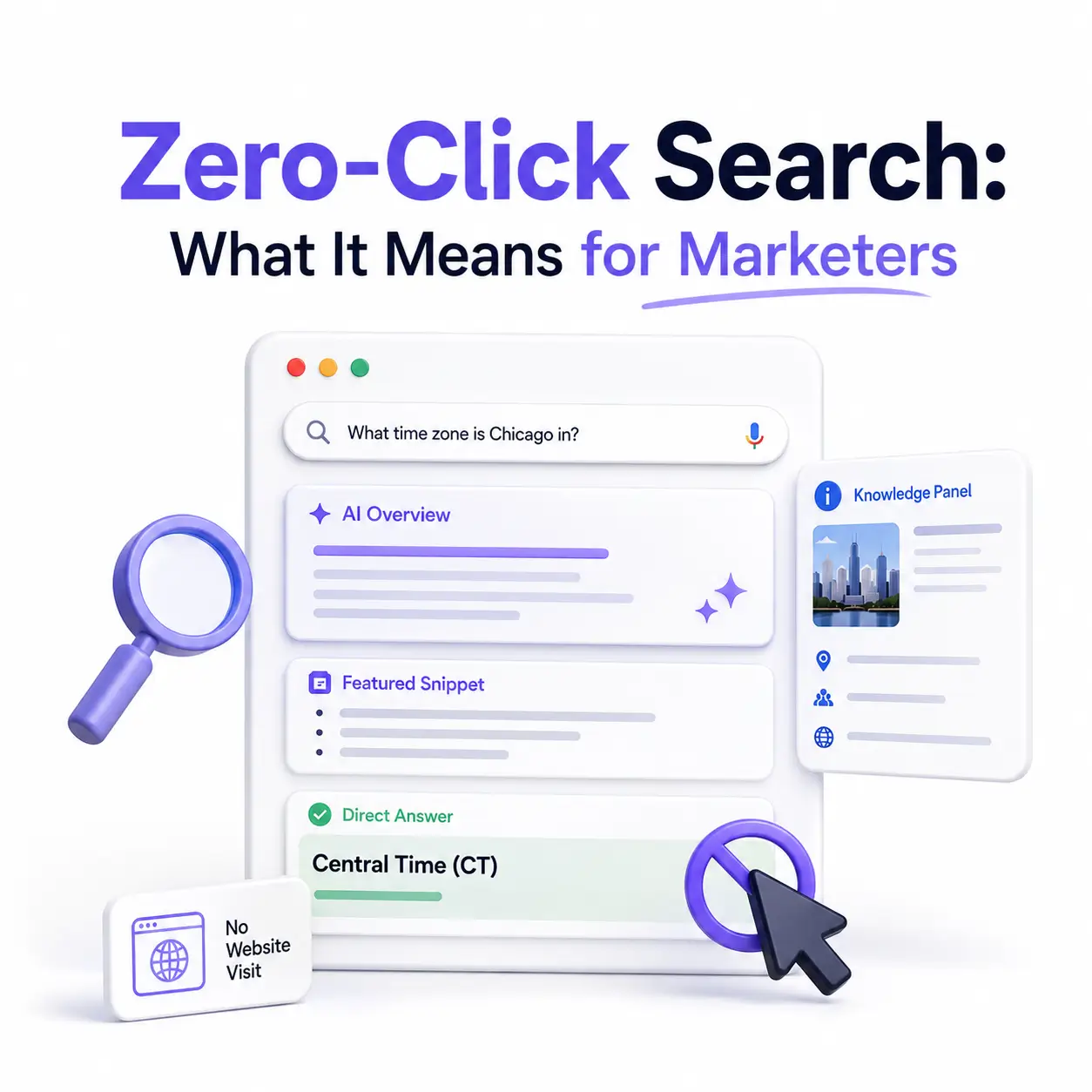
Type a question into Google today and there’s a good chance you’ll get your answer before you ever leave the results page. No blue link clicked. No website visited. Just an instant answer, sitting right there in an AI Overview or a featured snippet.
That’s a zero-click search, and it’s rapidly becoming the norm rather than the exception. For marketers who have spent years optimizing content to earn clicks, this shift raises an uncomfortable question: if fewer people are clicking through, is SEO still worth doing?
The short answer is yes, but the rules have changed. This guide breaks down what zero-click search actually means, why it’s happening, and most importantly, what marketers should do about it.
What Is a Zero-Click Search?
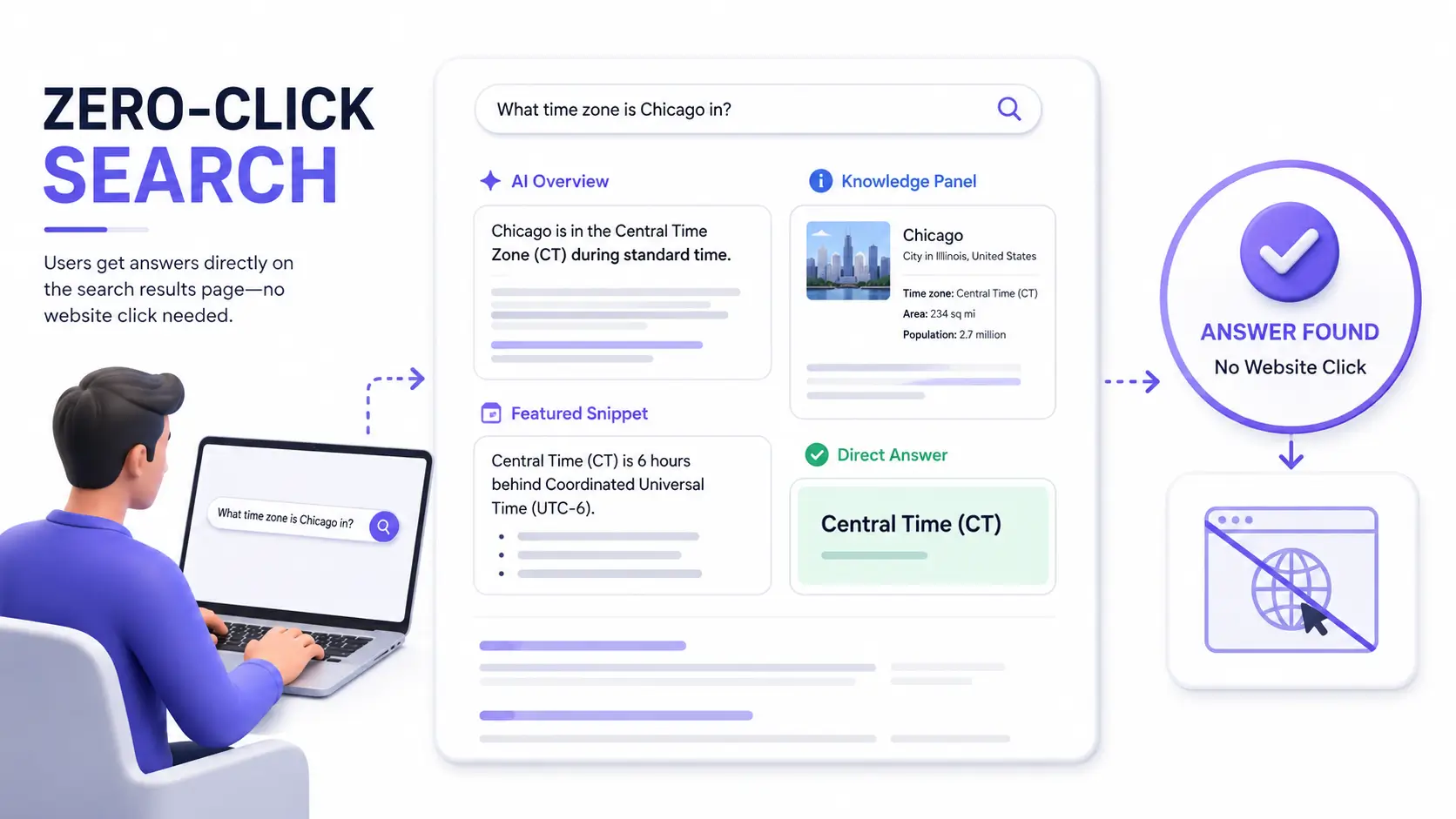
A zero-click search happens when a person types a query into a search engine and gets their answer directly on the results page, without clicking through to any website. The search “ends” right there no visit, no page view, no session on your site.
These answers show up in a few familiar formats: AI Overviews (Google’s AI-generated summaries at the top of results), featured snippets, knowledge panels, and direct answer boxes for things like definitions, conversions, or quick facts.
A Simple Example of Zero-Click Search
Search “what time zone is Chicago in” and Google tells you instantly: Central Time. Search “15 USD to EUR” and a live currency converter appears. In both cases, the searcher’s question is fully answered on the results page. There’s no reason to click anywhere else, so most people don’t.
Zero-Click vs. Traditional Search Results
In a traditional search, Google shows a list of ranked links and the user picks one to visit. In a zero-click search, Google (or another AI-powered engine) synthesizes an answer itself, often by pulling information from several sources at once. The searcher’s need gets met before they ever reach the list of links below it.
Why Zero-Click Search Is Growing
Zero-click search isn’t new; featured snippets and knowledge panels have been reducing clicks for years. What’s accelerated the trend recently is the rise of generative AI inside search itself.
The Rise of AI Overviews and Answer Engines
Google’s AI Overviews now generate a synthesized, conversational answer for a large share of queries, drawing on multiple web sources to write a direct response rather than just linking to them. Other AI-native search tools, like ChatGPT Search and Perplexity, work the same way by default they’re built to answer, not to hand off traffic.
Featured Snippets, Knowledge Panels, and Instant Answers
Alongside AI Overviews, Google still uses featured snippets (a highlighted paragraph, list, or table pulled from a webpage), knowledge panels (fact boxes about people, places, and things), and instant answers for calculations, definitions, and conversions. Together, these formats mean an increasing number of queries never require a click at all.
How Big Is the Zero-Click Problem?
It helps to see the scale of this shift in real numbers. Estimates vary depending on the research methodology, but they all point in the same direction: a majority of searches now end without a click.
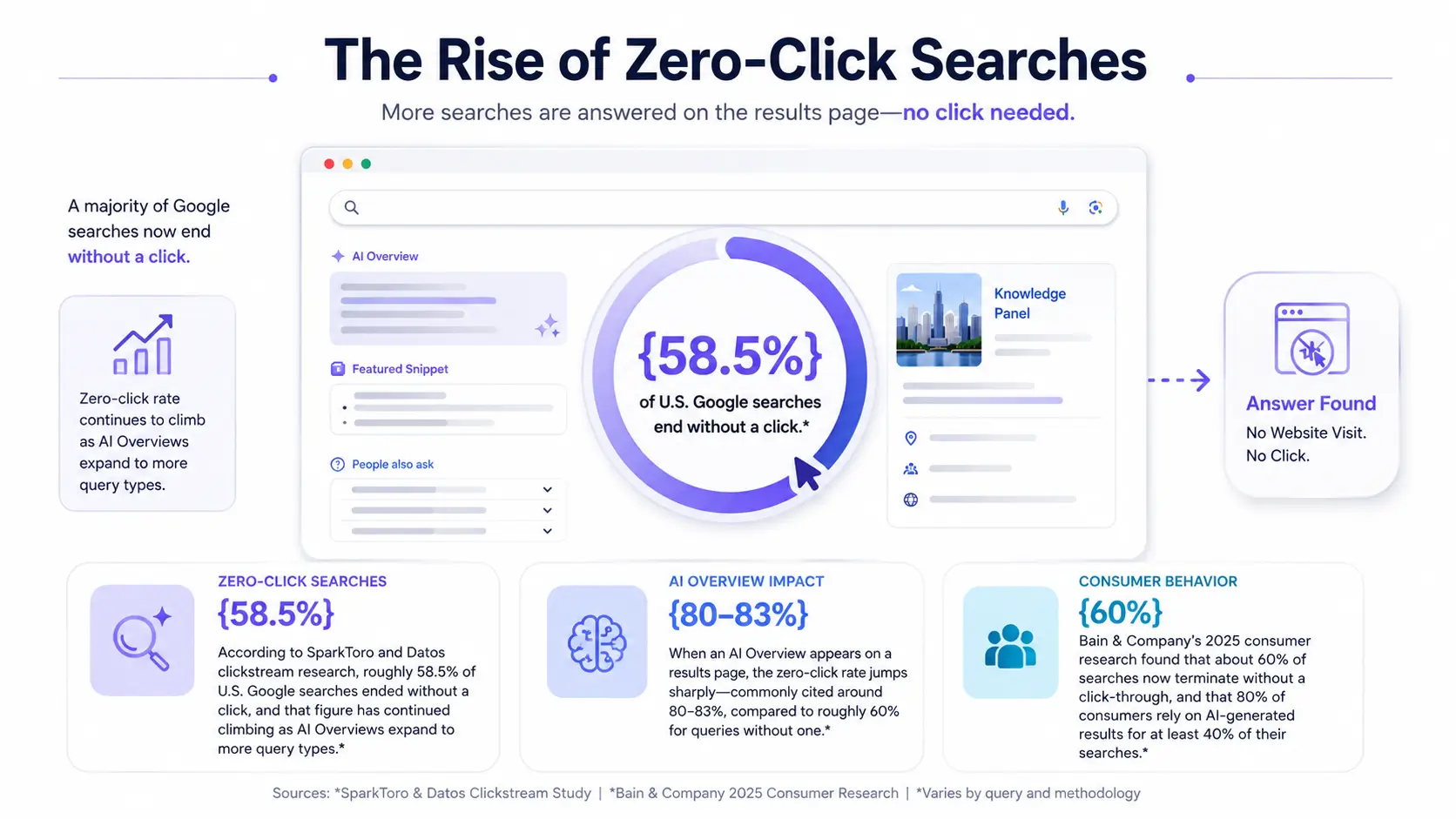
According to SparkToro and Datos clickstream research, roughly 58.5% of U.S. Google searches ended without a click, and that figure has continued climbing as AI Overviews expand to more query types.
Bain & Company’s 2025 consumer research found that about 60% of searches now terminate without a click-through, and that 80% of consumers rely on AI-generated results for at least 40% of their searches.
When an AI Overview appears on a results page, the zero-click rate jumps sharply commonly cited around 80–83%, compared to roughly 60% for queries without one.
Zero-Click Rates by Query Type
Not all searches are affected equally. Simple, factual questions (definitions, conversions, quick facts) are the most likely to resolve with zero clicks. Research-heavy queries, product comparisons, and navigational searches (like looking for a specific brand’s website) still reliably generate clicks, because the searcher needs more depth or a specific destination than an instant answer can provide.
What Zero-Click Search Means for Marketers
For marketers used to measuring success by organic traffic, this trend can feel alarming. But the real story is more nuanced than “SEO is dying.” It’s better understood as a shift in where value is created.
The Traffic and CTR Impact
The immediate, measurable effect is a decline in organic click-through rate. Ranking #1 no longer guarantees a visit if an AI Overview answers the query before the searcher scrolls down. Some studies report organic CTR dropping significantly on queries where an AI Overview appears, even for pages that still rank well.
Why Zero-Click Doesn’t Mean Zero Value
Here’s the reframe that matters most for beginners: zero-click doesn’t mean zero value it means the value has moved. If your brand is the one named, quoted, or recommended inside that AI-generated answer, you’re still reaching the customer at the exact moment they’re deciding. You just didn’t need a click to do it.
Seer Interactive’s November 2025 research found that brands cited inside AI Overviews earn 35% more organic clicks and 91% more paid clicks than non-cited brands on the very same query proof that being the cited source pays off even in a zero-click environment.
In other words, the goal is no longer just to rank. It’s to become the source that AI systems trust enough to cite by name. Think of it as the shift from being found in a list to being cited inside the answer.
How to Optimize for a Zero-Click World
None of this means marketers are powerless it means the tactics need to evolve. Here’s where to focus.
Structure Content to Win the Answer Box
Simple formatting choices dramatically improve your odds of being pulled into a featured snippet or AI Overview:
- Answer the core question directly in the first 1–2 sentences of a section, before adding supporting detail.
- Use clear, descriptive headings that match how people actually phrase questions.
- Format step-by-step content as numbered lists and comparisons as tables both are easy for search engines to extract.
- Keep definitions concise (40–60 words) so they can be lifted cleanly into a snippet or AI answer.
Focus on Answer Engine Optimization (AEO) and GEO
Two newer disciplines matter alongside traditional SEO. Answer Engine Optimization (AEO) is about structuring content so AI systems can easily extract accurate, attributable answers from it. Generative Engine Optimization (GEO) is the broader practice of earning visibility and citations inside AI-generated responses across tools like Google AI Overviews, ChatGPT, and Perplexity. Both prioritize clarity, credibility, and being easy for a machine to quote correctly, not just easy for a human to skim.
Build Brand Recognition Beyond the Click
Since fewer people are visiting your site directly, brand recognition has to work harder elsewhere. Invest in being genuinely well-known and well-reviewed: authoritative backlinks, consistent citations across the web, strong reviews, and a recognizable name all increase the odds an AI system chooses to mention you by name even without sending a click.
How to Measure Success When Clicks Decline
If clicks are becoming a less reliable metric, marketers need new ways to prove their content is working.
New Metrics to Track Besides Clicks
- Impressions: How often your content appears in search results and AI Overviews, even without a click.
- Brand mention frequency: How often your brand name shows up in AI-generated answers across tools.
- Share of voice: How your visibility compares to competitors within AI answers for shared queries.
- Assisted conversions: Whether people who saw your brand in a zero-click answer later convert through a branded search, direct visit, or other channel.
Traffic that does still convert through zero-click discovery tends to be higher quality: these are people who arrived already informed, having read a summary before ever clicking, which often makes them faster to convert.
Frequently Asked Questions
What is a zero-click search?
A zero-click search happens when a user finds the answer they need directly on the search results page through an AI Overview, featured snippet, or knowledge panel without clicking through to any website.
Is zero-click search bad for SEO?
Not entirely. It reduces traditional organic clicks, but it shifts the goal from “get the click” to “get cited or recommended in the answer.” Visibility and brand trust still matter they just look different now.
What percentage of searches are zero-click in 2026?
Estimates vary by source and methodology, ranging from roughly 58% to over 68% of U.S. Google searches, with rates climbing significantly higher often 80%+ when an AI Overview appears.
How do you optimize for zero-click search?
Structure content to directly and concisely answer common questions, use clear headings and lists, earn credible citations, and focus on answer engine optimization (AEO) so AI tools can easily extract and attribute your content.
Can brands still get traffic from zero-click searches?
Yes, though less directly. Traffic that comes through AI-driven results tends to be higher-intent and convert better, since users are already informed before clicking.
What metrics matter most in a zero-click world?
Impressions, brand mention frequency, share of voice within AI answers, and assisted conversions matter more now, since raw click volume no longer captures the full picture of visibility.
Key Takeaways
- Zero-click search means a growing share of queries are answered directly on the results page, without a website visit.
- It’s driven primarily by AI Overviews, featured snippets, and knowledge panels.
- More than half of Google searches now end without a click, and that share keeps growing.
- Zero-click doesn’t mean zero value: brands cited in AI answers still earn more clicks and trust than uncited ones.
- Marketers should optimize for AEO/GEO, structure content for extractability, and track new metrics like impressions and brand mentions instead of relying on clicks alone.