
If you’ve spent any time scrolling social media, reading product reviews, or watching unboxing videos, you’ve already encountered user-generated content even if you didn’t know the term. UGC, or user-generated content, has quietly become one of the most powerful forces in modern marketing. This guide breaks down exactly what it is, why it matters right now, and how you can start using it, even if you’re completely new to the concept.
What Does User-Generated Content Mean?
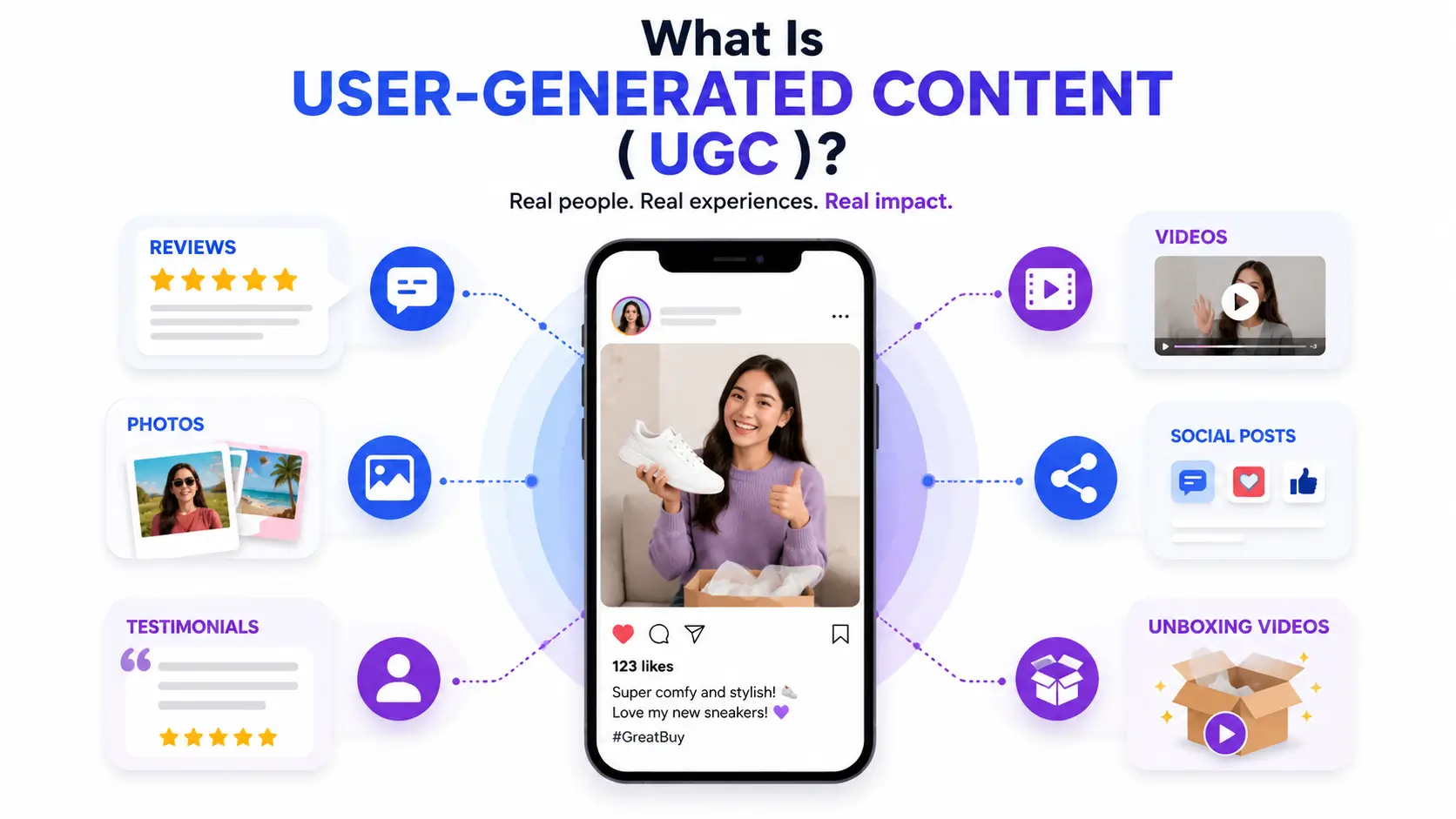
UGC stands for user-generated content: any content, including photos, videos, reviews, testimonials, or social posts, created by real customers or users rather than by a brand itself. It can be shared organically, with no brand involvement at all, or encouraged through a campaign, contest, or simple request. Either way, the defining feature of UGC is that it comes from a real person sharing a genuine experience, not a marketing team crafting a message.
Think of a customer posting a photo of their new sneakers with a caption about how comfortable they are, or someone leaving a five-star review describing exactly how a product solved their problem. That’s UGC in its simplest form.
UGC vs. Branded Content: The Core Difference
Branded content is created by a company (or an agency working for that company) with a specific message in mind. It’s polished, scripted, and approved before it ever reaches an audience. UGC is the opposite. It isn’t written by a copywriter, filmed by a production team, or signed off by a brand manager. That lack of polish is exactly what makes it work it looks and feels like something a friend would share, not something a company paid for.
Why UGC Matters in 2026
UGC isn’t a new idea, but its importance has grown sharply in the last few years. Two forces are driving that shift: growing skepticism toward traditional advertising, and a flood of AI-generated content that’s made audiences more cautious about what’s actually real.
The Trust Factor: Why People Believe Peers Over Brands
People are naturally more skeptical of a brand telling them their own product is great than they are of an independent customer saying the same thing. That’s simply how trust works; we tend to believe people who have nothing to gain from convincing us. This is why reviews, testimonials, and everyday social posts often carry more persuasive weight than a polished ad campaign ever could.
How UGC Fits Into an AI-Saturated Content Landscape
As AI tools make it easier than ever to generate large volumes of content quickly, audiences are becoming noticeably more careful about what they trust online. In this environment, content that’s clearly created by a real person, describing a real experience, stands out precisely because it can’t be mistaken for something automated. In many ways, User-generated content has become one of the clearest remaining signals of authenticity on the internet a kind of “proof of human” in a content landscape where AI-generated material is everywhere. Rather than losing relevance, UGC’s value is arguably increasing as that gap between real and artificial content grows more important to consumers.
Types of User-Generated Content
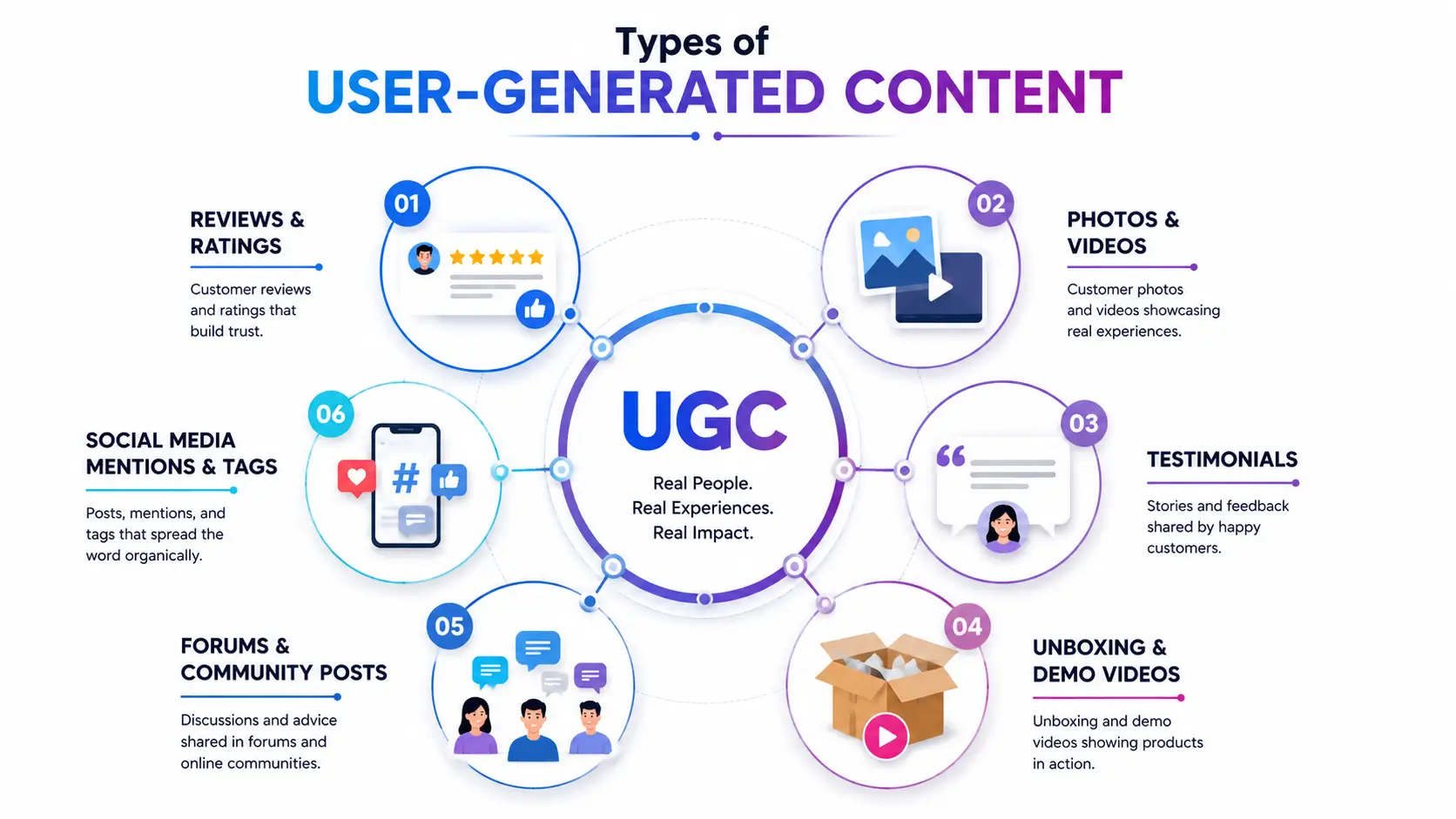
UGC isn’t limited to one format. It shows up in many different shapes across the internet, and recognizing them is the first step to using them effectively.
Common types include:
- Reviews and ratings on sites like Amazon, Google, or industry-specific platforms
- Photos and videos shared on social media featuring a product or service
- Testimonials submitted directly to a brand
- Unboxing and demo videos on platforms like YouTube or TikTok
- Forum and community posts where users discuss or troubleshoot a product
- Social media mentions and tags, whether positive, neutral, or critical
Organic UGC vs. Paid/Sponsored UGC
Not all UGC happens spontaneously. Organic UGC is created without any brand involvement a customer simply decides to share something on their own. Paid or sponsored UGC, on the other hand, is commissioned by a brand, often from a creator who produces content designed to look and feel like an authentic customer post, even though they were compensated for it. Both types can be valuable, but they serve slightly different purposes and should be disclosed appropriately.
Real-World Examples Across Industries
A skincare brand might repost a customer’s honest before-and-after photo. A software company might feature a case-study-style testimonial from a user describing how a tool solved a specific workflow problem. A restaurant might screenshot a glowing review and share it to their own social feed. Across nearly every industry, the common thread is the same: real people, describing real experiences, in their own words.
UGC vs. Influencer Marketing: What’s the Difference?
Beginners often confuse UGC with influencer marketing, and it’s an easy mix-up since both involve content created outside the brand’s internal team. The key difference comes down to what’s actually being purchased.
With UGC, a brand is typically buying the content itself, along with the rights to use it not access to a large existing audience. With influencer marketing, a brand is paying for exposure to someone else’s audience, and the content is really just the vehicle for that reach. A UGC creator might have a small following, or none at all; what they’re offering is authentic-feeling content, not distribution.
When to Use Each Approach
Many brands don’t choose one over the other they use both. UGC tends to work well as ad creative, product page content, or organic social posts, because it feels native and unforced. Influencer partnerships tend to work better for building broader awareness, since they tap into an audience the brand doesn’t already have. User-generated content keeps owned channels stocked with authentic material, while influencer content pushes that authenticity in front of new people.
The Benefits of UGC for Brands and Creators
UGC offers a combination of advantages that’s hard to replicate with any single alternative approach.
Trust and authenticity. Because it comes from real customers, UGC tends to be perceived as more credible than brand-produced messaging, which can directly influence purchase decisions.
Cost efficiency. Producing a full studio shoot is expensive and time-consuming. User-generated content lets brands build a steady content supply without that overhead, often by repurposing content that already exists.
Higher engagement. Social platforms tend to favor content that feels authentic and generates genuine interaction, which often gives UGC an edge over heavily produced brand content in terms of reach.
Cost and Scale Advantages
Because UGC doesn’t require the same production budget as traditional campaigns, brands can maintain a consistent flow of fresh content without scaling their production team. A single satisfied customer’s photo or video can be repurposed across ads, product pages, and social posts.
SEO and Discoverability Benefits
UGC also has value beyond social media. Customer reviews add fresh, keyword-rich, unique text to product and service pages, which search engines tend to favor. Community discussions and forum posts can rank for long-tail questions a brand’s own content might never directly address, extending a brand’s visibility well beyond its owned channels. When combined with a broader content marketing strategy, UGC can help brands build credibility, increase organic visibility, and create a more authentic connection with their audience.
How to Get Started With UGC
If you’re new to UGC, you don’t need a complex strategy to begin. A handful of simple, deliberate steps is enough to start building a content pipeline.
Simple Ways to Encourage Customers to Create Content
Start by simply asking. A short follow-up email requesting a review, a branded hashtag customers can use, or a small incentive like a discount code for a shared photo can all generate a steady trickle of UGC. Monitoring social mentions and tags is another easy way to discover content that’s already being created without any prompting at all.
Legal and Permission Basics You Shouldn’t Skip
Before reusing anyone’s content, always get clear permission. A simple comment reply or direct message asking to repost is often enough, but for paid or larger-scale use, a written agreement is safer. Never assume that because content is public, it’s automatically free to use in ads or marketing materials. Taking this step seriously protects both the brand and the creator.
Common UGC Mistakes to Avoid
A few missteps show up repeatedly, even among experienced marketers. Skipping permission requests is one of the most common and riskiest mistakes, since using someone’s content without consent can create real legal and reputational problems. Over-editing UGC until it looks polished and branded is another; the entire value of UGC comes from its rawness, so heavy editing can strip away the authenticity that made it worth using in the first place. Finally, ignoring negative UGC, such as critical reviews or complaints, is a missed opportunity; responding thoughtfully to less flattering content often builds more trust than only ever showcasing the positive.
FAQ
What does UGC stand for?
UGC stands for user-generated content any content like photos, videos, reviews, or social posts created by real customers or users rather than by a brand itself. It’s shared organically or with a brand’s encouragement, and it’s valued for feeling authentic rather than produced.
What is an example of user-generated content?
Common examples include a customer’s product review on Amazon, an unboxing video on TikTok, a testimonial photo shared on Instagram, or a question answered in a brand’s community forum. Anything created by a real user without brand scripting counts as UGC.
Is UGC the same as influencer marketing?
No. With UGC, brands typically buy content and usage rights from everyday customers or creators. With influencer marketing, brands pay for access to someone’s existing audience. Many brands combine both, using UGC for ad creative and influencers for reach.
Do brands pay for UGC?
Sometimes. User-generated content can be fully organic and unpaid, or brands can commission creators to produce content that looks and feels like authentic customer content. Paid UGC is common for ad creative, while organic UGC often comes from genuinely satisfied customers.
Why is user-generated content important for brands?
UGC builds trust faster than traditional advertising because people believe real customer experiences over polished brand messaging. It’s also more cost-effective to produce at scale and tends to perform well in social algorithms that favor authentic engagement.
Is UGC still relevant with AI-generated content on the rise?
Yes, possibly more relevant. As AI-generated content becomes widespread, audiences grow more skeptical of what’s real, which increases the value of content that’s demonstrably human and experience-based. user-generated content is one of the clearest signals of authenticity left.