Ecommerce SEO is the practice of optimizing your online store so its category pages, product pages, and content show up in search results and AI-generated answers. The goal is simple: get shoppers who are ready to buy to find you without paying for every click.
In 2026 the picture is more complicated than it used to be. Organic search is still one of the biggest sources of store traffic, but AI answers are changing how many people click through. This guide covers what ecommerce SEO is, why it matters now, and the five steps beginners should take, in order.
What Is Ecommerce SEO?
Search engines like Google read, organize, and rank web pages. Ecommerce SEO means making your store easy for them to understand and more useful than competing stores for the searches your customers make.
How Does E-commerce SEO Differ From Regular SEO?
Regular SEO often focuses on blog posts and informational content. Ecommerce SEO centers on pages that sell: category pages, product pages, and filtered views. Three things set it apart:
- Commercial intent: Shoppers searching “waterproof hiking boots women” are close to buying.
- Scale: A store can have thousands of URLs, with duplicates created by sizes, colors, and filters.
- Success is measured in revenue, not just rankings or traffic.
Why Ecommerce SEO Matters in 2026
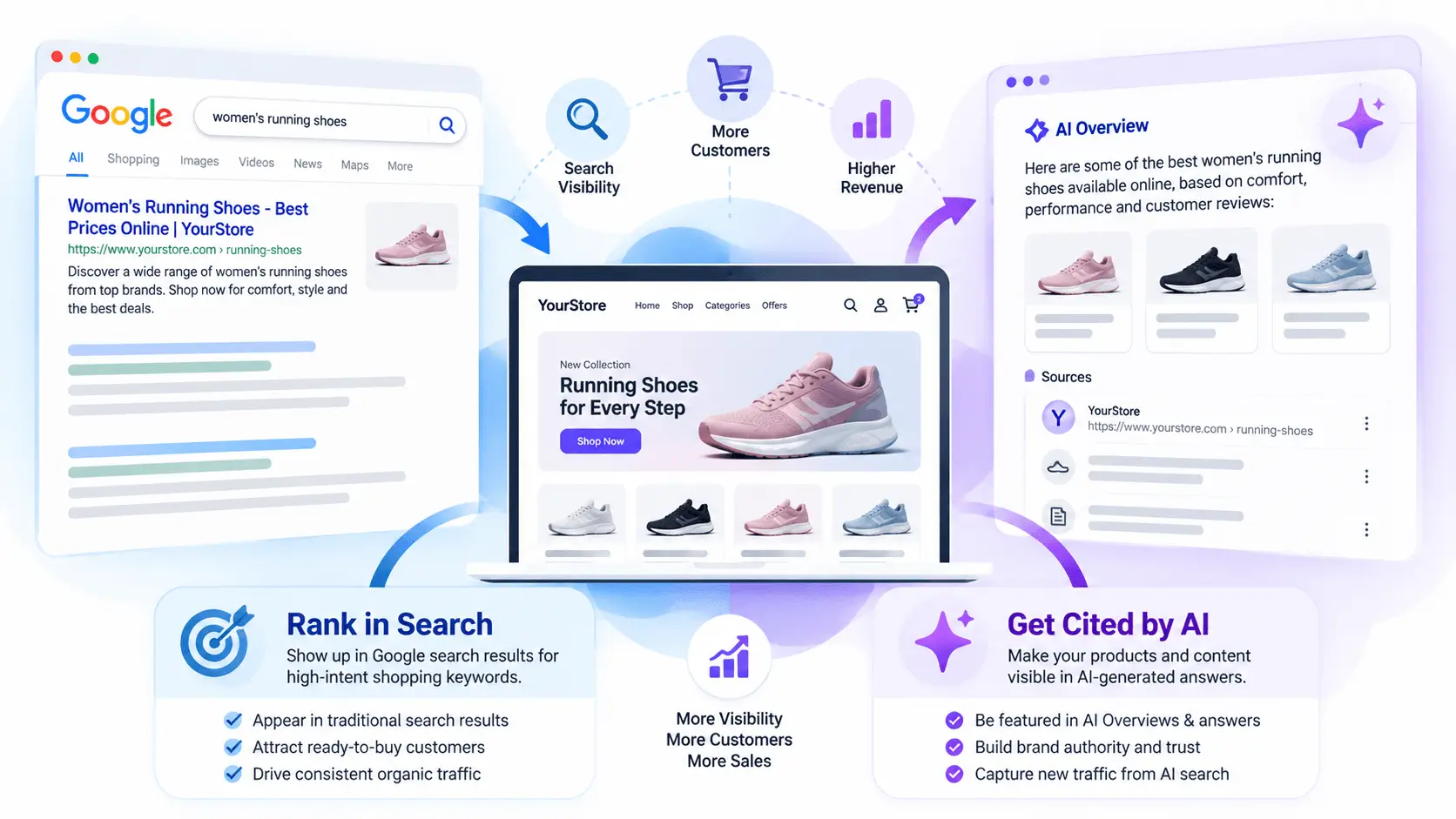
Organic search remains a core channel for online retailers. Estimates of its share of ecommerce traffic vary widely, from roughly a quarter to over 40%, depending on how each study defines “traffic” and which stores it samples. The takeaway is consistent: organic is a major source for most shops.
But the ground is shifting. The LEAP × SISTRIX AI & SEO Study 2026 (published September 2026) found that median SEO visibility among top e-commerce shops fell 16.7% in a year, after three years of growth. The share of keywords affected by Google AI Overviews rose from 4.3% to 14.2%, and the organic share of traffic dropped from 42.5% to 33.3%.
Is SEO Still Worth It?
Yes, with a caveat. Other analyses report that AI-referred visitors to US retail sites are growing fast and tend to convert well, while BrightEdge’s research found AI search was still under 1% of referral traffic in 2025. Both can be true. Traditional organic traffic is still the larger channel, but it is becoming harder to win and AI visibility is becoming a second goal.
That is the idea behind this guide’s framework: Rank and be cited. Earn rankings the traditional way, and also make your content the kind AI tools quote.
How Ecommerce SEO Works
Search engines work in three stages:
- Crawling: Automated bots follow links to discover your pages.
- Indexing: The engine stores and categorizes what it found.
- Ranking: When someone searches, it picks the most relevant, helpful, and trustworthy results.
AI answer engines add a step: they select sources to summarize or cite. They tend to favor clear, factual, well-structured pages from brands that appear trustworthy across the web. The five steps below serve both traditional ranking and AI citation.
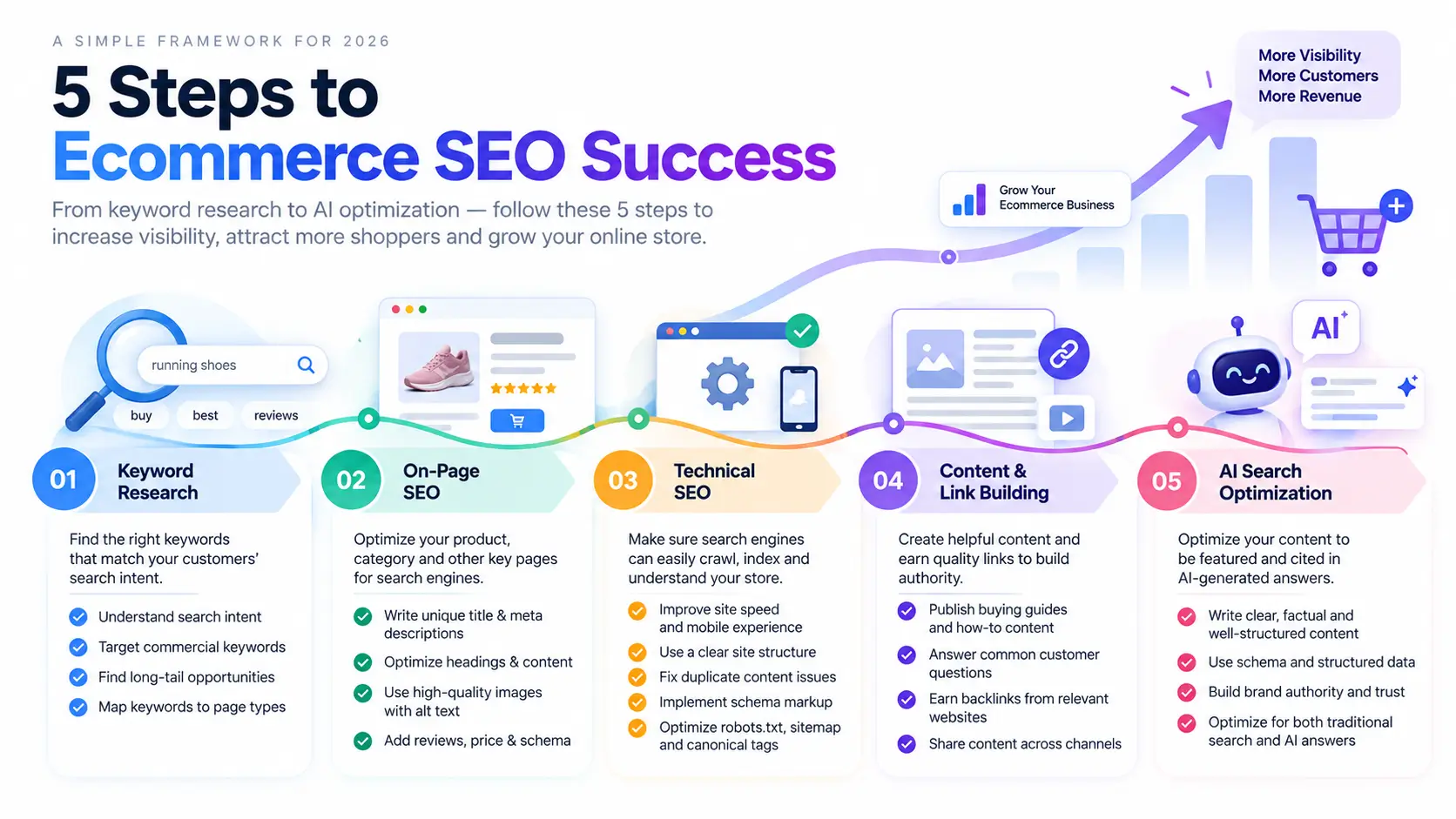
Step 1: Ecommerce Keyword Research
Keyword research tells you what your customers actually type. Start by matching keywords to page types:
- Homepage: your brand and your broadest category
- Category pages: commercial terms like “running shoes for flat feet”
- Product pages: specific, high-intent terms, such as a model name or exact product type
- Blog and guides: questions like “how to choose a running shoe”
Long-tail keywords (longer, more specific searches) usually have less competition and clearer buying intent. Google Search Console is a free place to see what you already rank for, and tools like Ahrefs or Semrush help you find new opportunities.
Step 2: On-Page SEO for Category and Product Pages
On-page SEO is everything you control on the page itself.
Which Pages Should You Optimize First?
Start with your category pages and your best sellers. Category pages target broader, higher-volume searches, and product pages capture specific buying searches.
Product page basics:
- A unique title and description (never copy the manufacturer’s text)
- One clear H1 with the product name and key attribute
- Original photos with descriptive alt text
- Reviews, price, availability, and specifications visible on the page
- Links to related products and the parent category
Category page basics:
- A short, useful intro that explains what shoppers will find
- A clean title tag targeting the main keyword
- Logical links to subcategories and top products
Keep URLs short and readable, such as /womens/hiking-boots.
Step 3: Technical SEO for Online Stores
Technical SEO makes sure search engines can access and understand your store.
- Site structure: Aim for products to be reachable within a few clicks from the homepage.
- Speed and mobile: Most shopping happens on phones. Compress images and check Core Web Vitals in Google Search Console.
- Duplicate content: Filters and variants can create near-identical URLs. Use canonical tags to point search engines to the main version.
- Out-of-stock products: Keep pages live if the item will return. If it is gone for good, redirect to a close alternative or category.
- Structured data: Product schema markup labels your price, availability, and reviews so search engines and AI tools can read them accurately.
Platforms like Shopify, WooCommerce, and BigCommerce handle many of these settings automatically, so check what your platform already does before adding plugins.
Step 4: Content Marketing and Link Building
Buying guides, comparisons, and how-tos attract shoppers earlier in their journey. They should link to your category and product pages to pass relevance and visitors along.
Off-page SEO means earning mentions and links from other sites. Realistic beginner tactics include:
- Getting listed by suppliers and brand partners
- Pitching original data or expertise to journalists and bloggers
- Encouraging customer reviews on trusted platforms
Quality matters more than quantity. A few relevant links beat hundreds of low-quality ones.
Step 5: Optimize for AI Search
Generative engine optimization (GEO), sometimes called answer engine optimization (AEO), means making your content easy for AI tools to use.
- Answer first. Put a clear, direct answer at the top of a page or section, then add detail. AI tools quote concise, self-contained passages.
- Be specific and original. Include real specifications, sizing guidance, comparisons, and first-hand testing instead of generic copy.
- Strengthen trust signals. Reviews, consistent brand information, author names, and mentions on reputable sites all help.
- Keep product data accurate. Structured data and product feeds (for example, in Google Merchant Center) help your products appear in shopping experiences.
Your First 30 Days: A Beginner Action Plan
Week 1: Audit. Connect Google Search Console and Google Analytics. Note your top pages and current organic traffic.
Week 2: Research. Choose target keywords for your top five categories and ten best-selling products.
Week 3: Optimize. Rewrite titles, descriptions, and intros on those pages. Fix missing alt text and add product schema.
Week 4: Expand. Publish one buying guide, link it to your category pages, and start collecting reviews.
Do You Need Coding Skills?
No. Most of this work is writing, organizing, and using your platform’s settings. Technical help becomes useful as the store grows.
Measuring Results and Avoiding Common Mistakes
Track organic revenue, non-branded clicks (searches that don’t include your brand name), rankings for priority keywords, and visits from AI tools where your analytics can identify them.
How long does it take? Early movement often appears within a few months, with larger gains over six to twelve months or more. Treat it as a long-term investment.
Common mistakes:
- Using manufacturer descriptions copied from other sites
- Ignoring category pages
- Letting filters create thousands of duplicate URLs
- Slow, image-heavy mobile pages
- Chasing rankings while ignoring conversions and revenue
Frequently Asked Questions
What is ecommerce SEO?
Ecommerce SEO is the process of optimizing an online store’s category pages, product pages, and technical setup so they appear higher in search results and AI-generated answers. The goal is to attract unpaid visitors who are ready to buy, which lowers reliance on paid ads and builds lasting, compounding traffic.
How is ecommerce SEO different from regular SEO?
Regular SEO focuses mainly on informational content, while ecommerce SEO centers on transactional pages: categories, products, and filters. It adds challenges such as thousands of URLs, duplicate content from variants, out-of-stock items, and product schema. Success is measured in revenue, not just rankings or traffic.
Does ecommerce SEO still work with AI Overviews?
Yes, but results change. A 2026 LEAP × SISTRIX study found AI Overviews now affect 14.2% of keywords analyzed, and median shop visibility fell 16.7% in a year. Stores that earn citations, use structured data, and publish original, helpful content are better placed to stay visible and attract higher-intent visitors.
How long does ecommerce SEO take to work?
Most stores see early movement in three to six months, but meaningful revenue growth typically takes six to twelve months or more, depending on competition, site authority, and resources. SEO compounds over time, unlike ads, which stop delivering the moment spending stops. Treat it as a long-term investment.
Do I need coding skills to do ecommerce SEO?
No. Beginners can start with the basics: researching keywords, writing unique product descriptions, creating clear category pages, and compressing images. Platforms like Shopify, WooCommerce, and BigCommerce handle many technical settings automatically. Add technical skills gradually as your store grows, such as site speed fixes and structured data.
Which pages should I optimize first?
Start with category pages and your best-selling product pages. Category pages typically target high-volume, commercial keywords and capture the most organic sessions, while product pages capture specific, high-intent searches. Optimize titles, unique descriptions, images, internal links, and product schema on these pages before moving to blog content.
Conclusion: Start Small, Stay Consistent
Ecommerce SEO in 2026 comes down to two goals: rank in search and be cited in AI answers. Both rest on the same foundations: helpful pages, clean technical setup, and trust. Start with your top categories and best sellers, work through the 30-day plan, and measure revenue, not just rankings.



Pingback: Shopify Marketing For Beginners: A Step-by-Step Guide 2026