Pinterest marketing is one of the few channels where work you do today can keep sending visitors to your website a year from now. Pinterest hit an all-time high of 640 million monthly active users in Q2 2026, its 11th straight quarter of double-digit user growth. If you’re new to the platform, this guide walks you through what it is, whether it suits your business, and how to build a working strategy in 30 days.
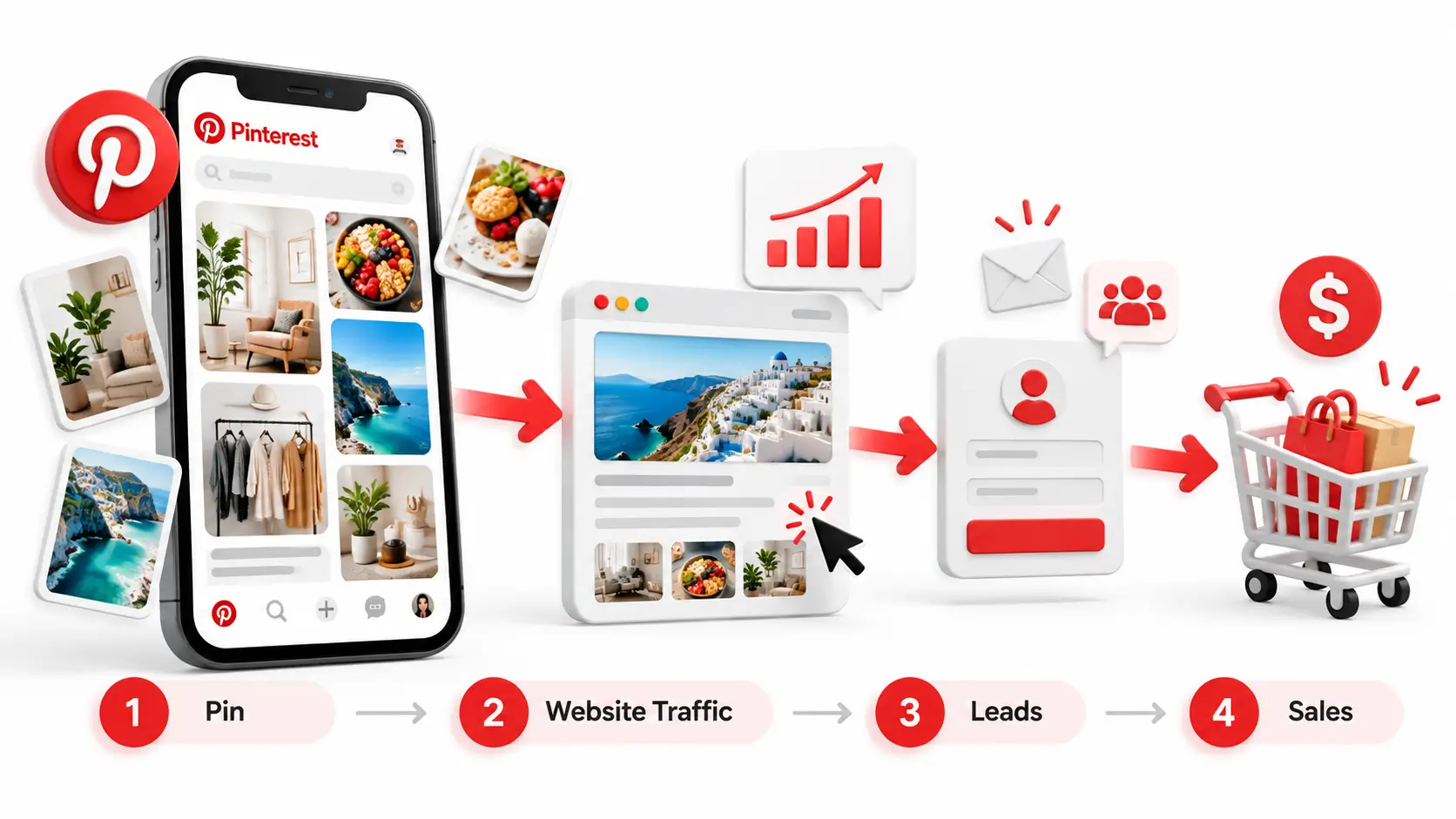
What Is Pinterest Marketing?
Pinterest marketing is the practice of using Pinterest to drive traffic, leads, and sales by publishing optimized Pins and boards and, optionally, running ads. A Pin is a saved image or video that links to a web page. A board is a themed collection of Pins.
Is Pinterest a Social Network or a Search Engine?
It’s closer to a visual search engine. On Instagram or TikTok, people mostly see content from accounts they follow. On Pinterest, people type keywords, browse results, and save ideas for later. That means your content is found through search terms rather than follower counts, and a good Pin can keep earning views for months or even years.
Is Pinterest Still Worth It for Business in 2026?
For many businesses, yes, but not all. Pinterest rewards brands in visual, planning-driven niches: home and decor, food, fashion, beauty, weddings, travel, DIY, and parenting. People use it to plan purchases and projects, so the audience often arrives with intent.
The Global vs. North America Split
Here’s a detail most guides skip. Pinterest’s audience is global, but advertiser demand is concentrated. In Q1 2026, the Rest of World had 367M monthly users versus 106M in US & Canada, yet US & Canada generated $750M of the quarter’s $1,008M revenue. That’s roughly 58% of users outside US and Canada, but about 74% of revenue from the region. For a beginner, the lesson is practical: if you sell to North American shoppers, paid campaigns may be worth testing sooner. If your audience is global or you rely on organic traffic, focus on search-optimized content first.
When Pinterest Isn’t the Right Channel
Pinterest is a weaker fit for niches with little visual appeal, highly technical B2B offers, or businesses that need instant results. If you need leads this week, look elsewhere first.
How to Set Up Pinterest for Business
Setup takes about an hour and lays the foundation for everything else.
- Create or convert to a business account. It’s free and unlocks analytics and ads.
- Claim your website. This verifies your domain and attributes your Pins to you.
- Enable Rich Pins. They pull extra details (like titles or prices) directly from your site.
- Build keyword-focused boards. Start with five to ten boards named after what your audience searches for, such as “small kitchen organization ideas” rather than “Kitchen Stuff.” Write a keyword-rich description for each.
Pinterest SEO: How to Get Your Pins Found
Pinterest SEO is the single biggest lever for organic growth, because the platform works like a search engine.
Do Keyword Research
Type a broad topic into Pinterest’s search bar and note the autocomplete suggestions. These reflect real searches. Click a suggestion and look at the colored guided-search tiles beneath the bar for related long-tail ideas.
Where to Put Keywords
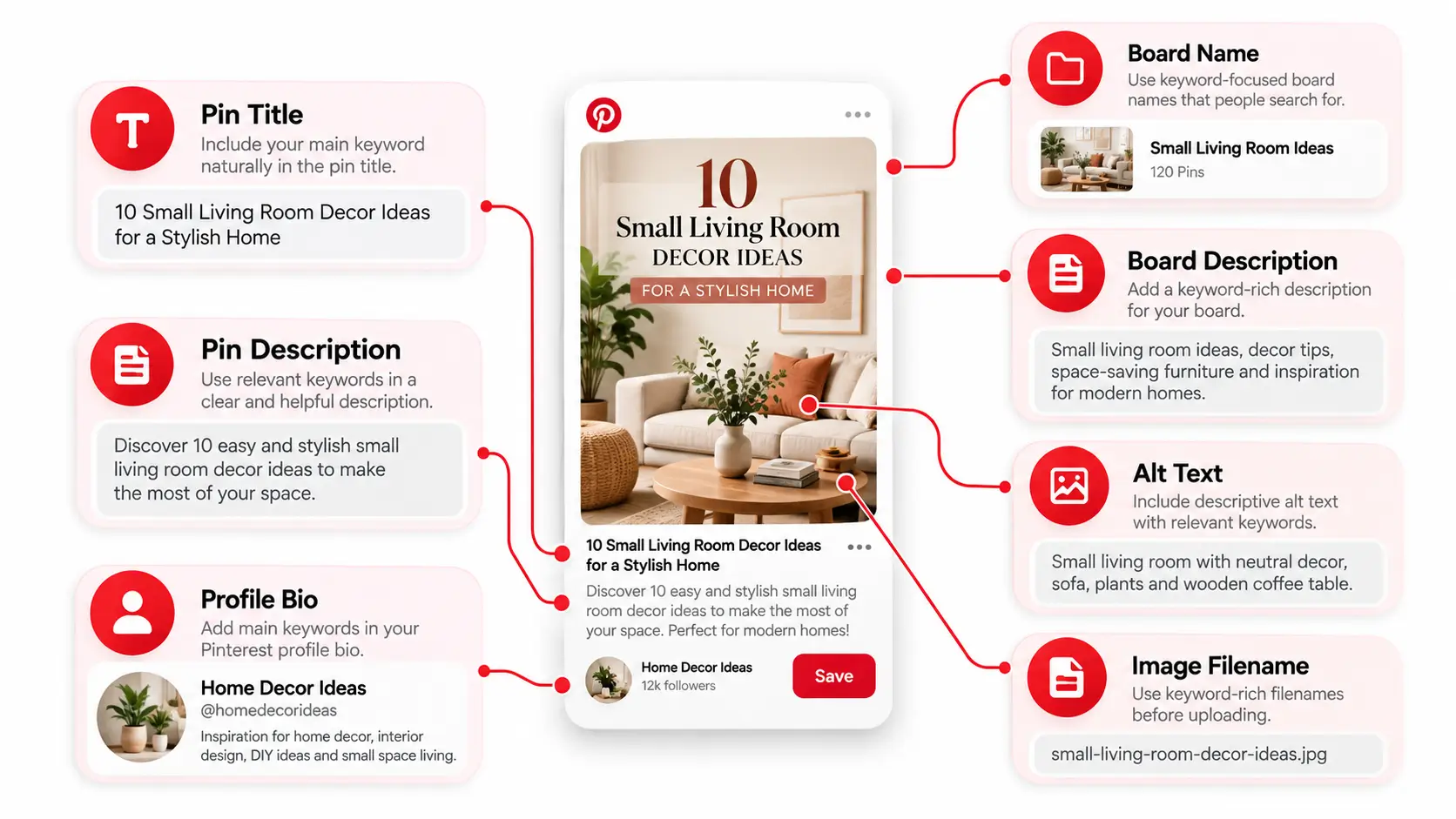
Place your main keyword naturally in the Pin title, the Pin description, the board name and description, your profile bio, the image’s alt text, and the filename of the image you upload. Write for people first. Stuffing keywords makes descriptions unreadable and doesn’t help.
Visual Search and AI Recommendations
Pinterest increasingly relies on AI and visual recognition to personalize recommendations, and its leadership has emphasized this direction. In practice, that means clear, high-quality images matter as much as text. Use sharp visuals that show your subject plainly, and make sure your Pin’s imagery matches its keywords.
Creating Pins That Get Saves and Clicks
Pin Formats
Standard image Pins are the easiest start. Video Pins can add reach, and product Pins suit online stores. Begin with images, then experiment once you have a routine.
Design Basics for Non-Designers
- Use a vertical 2:3 ratio (for example, 1000 x 1500 pixels).
- Add short, readable text overlay that states the benefit.
- Keep your brand colors and logo subtle but consistent.
- Use free tools like Canva to create templates you can reuse.
How Often to Post
Consistency beats volume. A common beginner benchmark is three to five fresh Pins per week, which you can raise as your workflow improves. Pinterest favors fresh content, so create new designs for each URL instead of reposting identical Pins.
Driving Traffic From Pinterest to Your Website
Every Pin should link to a page that delivers what the Pin promises. If a Pin shows “10 easy meal prep ideas,” the link should go straight to that article, not your homepage.
To see what’s working, add UTM parameters to your Pin links and review them in Google Analytics (GA4). Then check Pinterest Analytics for the metrics that matter most:
- Impressions: how often your Pins appear.
- Saves: how often people bookmark them, a strong signal of relevance.
- Outbound clicks: how many visits reach your site.
Give the channel time. Many accounts see early traction in three to six months, with growth compounding after that, though results vary by niche and consistency.
Pinterest Ads for Beginners
Organic Pinterest marketing is free. Paid options such as Promoted Pins and shopping ads use auction-based pricing, so costs vary by industry and targeting. A sensible approach is to run organically for a couple of months, identify your best-performing Pins, then put a small budget behind them. That way you’re paying to amplify proven content instead of guessing.
Where Pinterest Fits in Your Social Media Marketing Strategy
Pinterest shouldn’t live in isolation. It works best as one part of a wider social media marketing plan, where each platform plays a distinct role.
- Pinterest: long-term, search-driven discovery that sends steady traffic.
- Instagram: community-building and visual brand storytelling.
- TikTok and short video: fast reach and trend participation.
- Facebook and LinkedIn: groups, local audiences, and B2B relationships.
A simple way to combine them is to repurpose content. A blog post can become a Pin, an Instagram carousel, and a short video, all pointing back to the same page. If you’re still building your overall approach, start with our complete social media marketing guide.
Your 30-Day Pinterest Marketing Plan
Week 1: Foundation. Create your business account, claim your website, and set up five to ten keyword-focused boards. Research 20 target keywords.
Week 2: Create. Design and publish your first ten Pins, each tied to a specific keyword and landing page.
Week 3: Optimize. Add UTM parameters, check that every link goes to a relevant page, and refine titles and descriptions based on early impressions.
Week 4: Review. Open Pinterest Analytics, find your top Pins by saves and clicks, and create fresh variations of those winners. Decide whether to test a small ad budget.
Frequently Asked Questions
What is Pinterest marketing?
Pinterest marketing uses optimized Pins, boards, and ads to drive traffic, leads, and sales. Because Pinterest works like a visual search engine, content is discovered through keywords and can keep attracting views for months or years after you publish it.
Is Pinterest still worth it for business in 2026?
Yes, especially for visual, planning-driven niches like home, food, fashion, and travel. Pinterest reached 640 million monthly active users in Q2 2026. It’s less suited to low-visual niches or complex B2B sales cycles.
How do I start Pinterest marketing as a beginner?
Create a business account, claim your website, and build five to ten keyword-focused boards. Then publish fresh vertical Pins with keyword-rich titles that link to your content, post consistently, and review Pinterest Analytics monthly to see which Pins earn saves and clicks.
How often should I post on Pinterest?
Consistency matters more than volume. Beginners can start with three to five fresh Pins weekly and scale up later. Pinterest favors new content, so vary your designs for each URL rather than reposting identical Pins.
Does Pinterest marketing cost money?
Organic marketing is free apart from your time and optional design tools. Promoted Pins and shopping ads are auction-based, so costs vary. Many beginners go organic for a few months before adding ad spend.
How long does it take to see results on Pinterest?
Pinterest is a slow-burn channel. Most accounts see early traction within three to six months, with compounding growth afterward. Results vary by niche and consistency, so track impressions and saves early instead of waiting for clicks.
Conclusion
Pinterest rewards patience, keyword-smart content, and consistency. Set up your account properly, optimize every Pin like a search result, link to genuinely useful pages, and review your analytics monthly. Follow the 30-day plan above, then layer Pinterest into your broader social media marketing strategy. Ready to begin? Create your business account today and publish your first Pin this week.