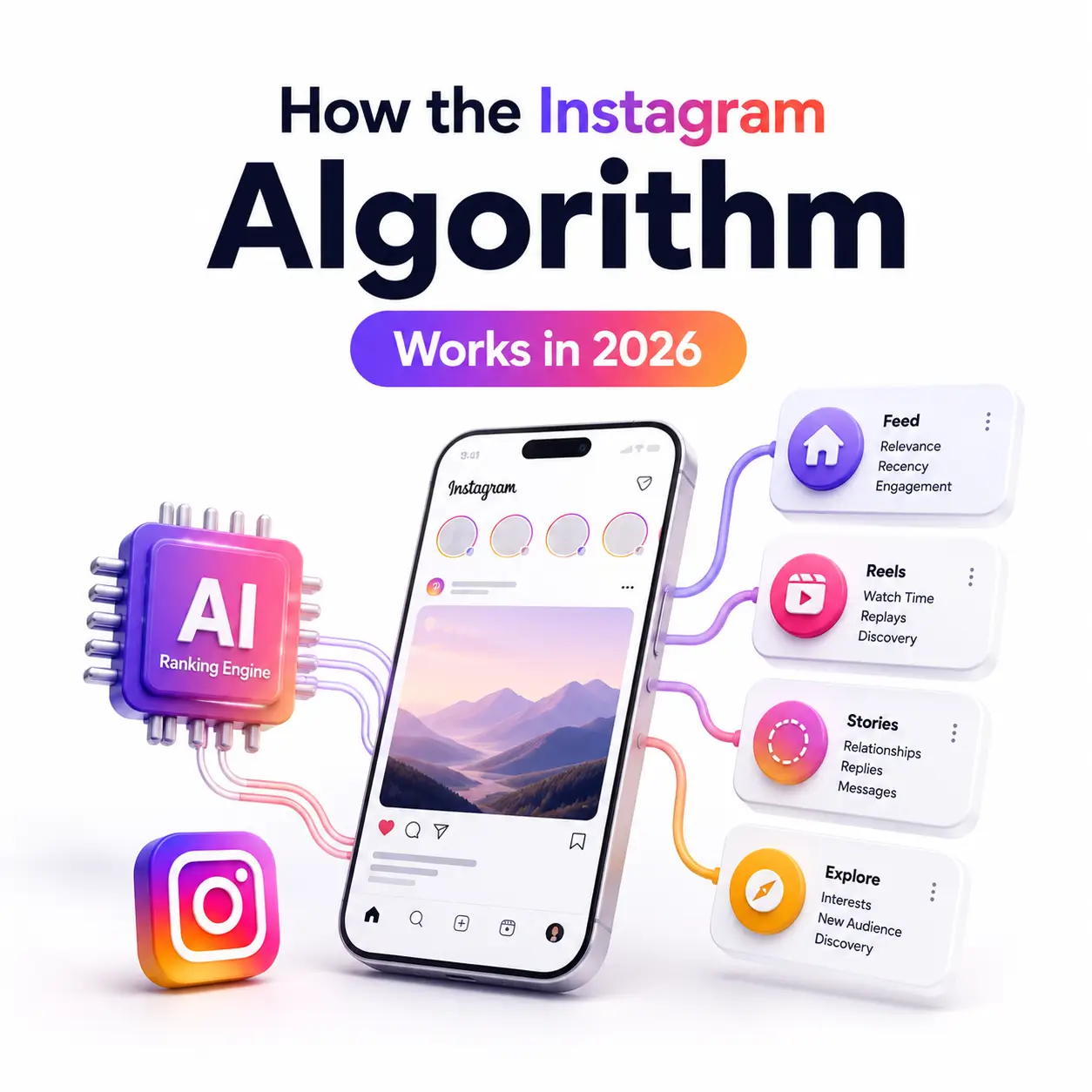
If you’ve ever posted something you were proud of on Instagram and watched it sink without a trace, you’ve probably wondered whether “the algorithm” is working against you. The good news: there isn’t one mysterious system deciding your fate. Instagram runs several AI-powered ranking models, each tuned to a different part of the app, and once you understand how they think, you can work with them instead of guessing in the dark. This guide breaks down exactly how the Instagram algorithm works in 2026, what’s changed recently, and what you can actually do about it.
What Is the Instagram Algorithm, Really?
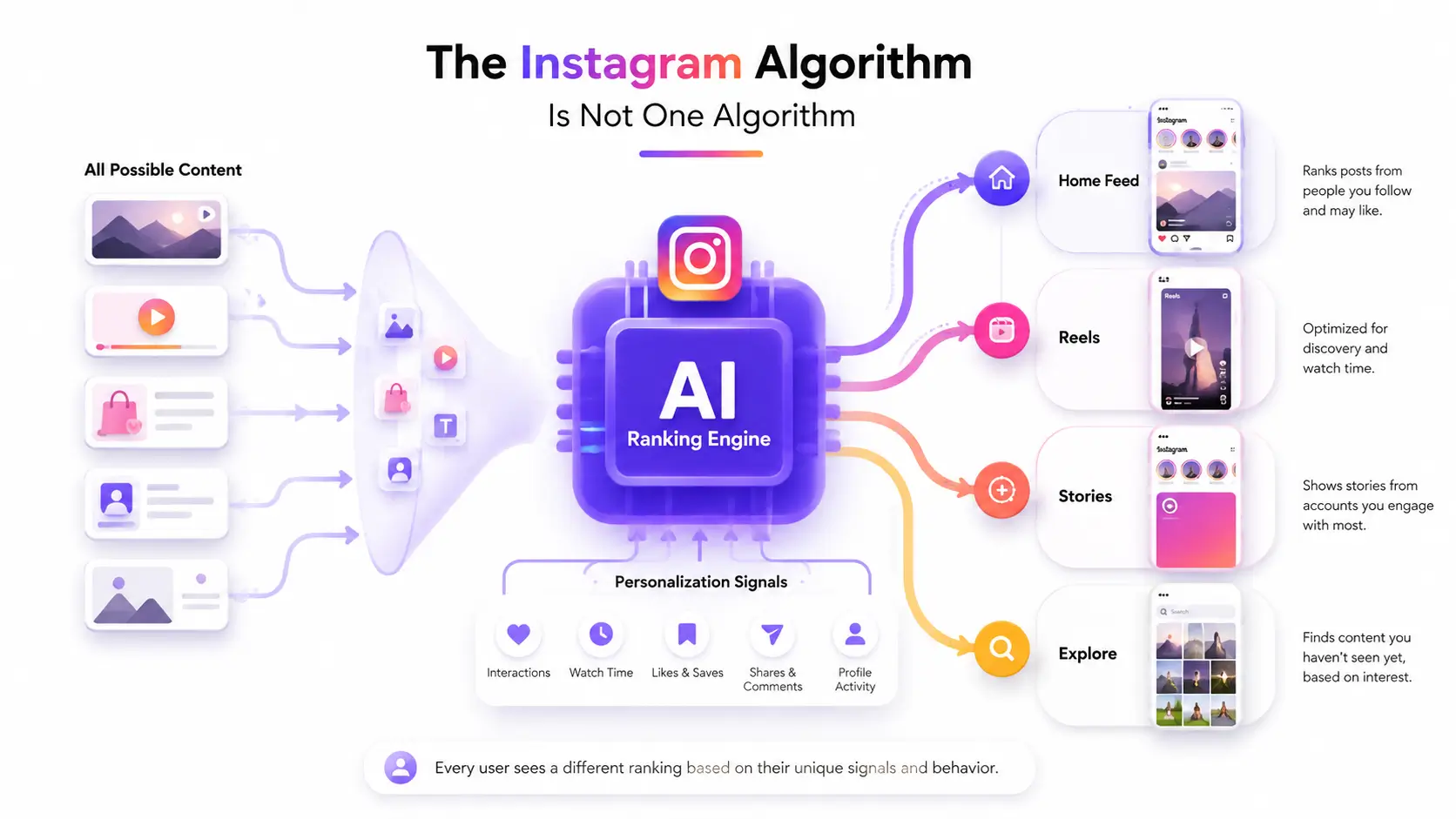
“The Instagram algorithm” is really shorthand for a collection of AI systems working together, rather than a single formula. Instagram itself describes it this way: different systems handle the Home Feed, Reels, Stories, and Explore, and each one is trained to predict one thing: how likely you are to be interested in a specific piece of content. Every time you open the app, these systems pull a pool of possible posts, score them based on your behavior and the content itself, and arrange them in the order they think will keep you engaged.
For beginners, the key mental shift is this: the algorithm isn’t hiding your content out of spite. It’s making a prediction, and your job is to give it better signals to predict with.
How the Instagram Algorithm Has Changed for 2026
The Shift Toward Original Content
One of the clearest 2026 trends is a stronger push toward originality. Instagram has been increasingly prioritizing and rewarding content that’s original and made specifically for the platform, rather than recycled from elsewhere. That shift comes with real teeth: Instagram now actively penalizes so-called “aggregator” accounts that repost content without adding meaningful value of their own, whether that’s fresh commentary, editing, or context.
Fairer Treatment for Smaller Accounts
Instagram also recalibrated how it weighs engagement data. In the past, large accounts had a built-in advantage because they could rack up interactions faster, which skewed the system toward already-popular content. The 2026 version of the algorithm adjusts for this, assessing how valuable or interesting people find a post relative to that creator’s typical engagement, not just against every other account on the platform. In practice, that means a smaller, newer account has a genuinely better shot at reach than it would have a few years ago.
The Ranking Signals Instagram Actually Uses
Across every surface, Instagram collects thousands of signals to predict what you’ll engage with. Some are simple, like language or location. Others are behavioral: what you watch, like, save, comment on, or share. Here are the categories that matter most.
Your Interaction History
Instagram pays close attention to your relationship with specific accounts: who you like, comment on, and message most. The more consistently you interact with someone, the more Instagram assumes you want to keep seeing them.
How Content Performs
This covers the basics: likes, comments, shares, saves, plus how quickly that engagement happens after posting. A post that gets fast, strong engagement signals relevance and often gets pushed to more people.
Information About the Poster
Instagram also looks at how many people have interacted with a creator over the past few weeks, which helps it judge whether an account is currently active, trustworthy, and worth showing more of.
Negative Signals (What Hurts You)
Just as important as what people do is what they don’t do. Instagram tracks when users skip a post, tap “Not interested,” or bounce away after only a second or two of viewing. These negative signals tell the system a post may not deserve as much reach, even if it picked up a few likes along the way.
How Each Instagram Surface Ranks Content Differently
This is the part most beginner guides skip, and it’s arguably the most useful thing to understand: Instagram runs distinct ranking systems for each part of the app, and treating “the algorithm” as one single entity is the most common mistake people make when trying to grow their account.
The Home Feed Algorithm
The Feed algorithm pulls a pool of posts it thinks are relevant to you, from accounts you follow and accounts it thinks you’d like, then orders them by relevance, timeliness, and engagement. It also intentionally avoids showing too many posts from one account back to back, so consistency over time matters more than posting five times in a single hour.
The Reels Algorithm
Reels are optimized for discovery beyond your existing followers. This system weighs watch time, replays, and how recently people have engaged with your videos, which is why timing a follow-up post while interest in your account is already high tends to perform better.
The Stories Algorithm
Stories ranking leans heavily on your closest relationships: the accounts you view, reply to, and message most often show up first in someone’s Stories tray. Stories won’t drive the reach that Reels can, but they’re valuable for staying visible to your most engaged audience without over-posting to the main Feed.
The Explore Page Algorithm
Explore is built almost entirely around interest prediction rather than existing relationships. If you frequently engage with a certain topic, Instagram’s systems will surface similar content from creators you don’t yet follow, which makes Explore the main gateway for reaching entirely new audiences.
A Quick Note for Marketers: Why This Matters Beyond Personal Posting
Understanding how the Instagram algorithm works isn’t just useful for individual creators it’s foundational to social media marketing. Because each surface (Feed, Reels, Stories, Explore) ranks content using different signals, marketers who plan a single generic post for every placement tend to underperform brands that tailor content per surface: short, native-feeling Reels for discovery, relationship-driven Stories for retention, and save-worthy Feed posts for long-term relevance. In other words, the algorithm doesn’t just decide who sees your content; it effectively sets the content marketing. Brands that build their calendars around these ranking signals, rather than around posting frequency alone, consistently see stronger organic reach without increasing ad spend.
Practical Tips to Work With the Algorithm
Post Consistently, Not Constantly
The Feed algorithm heavily weighs how often people have engaged with an account in recent weeks, so posting too infrequently means you slip under the radar. A good starting cadence is one to two posts per day, then adjust based on what your own data shows.
Lean Into Reels and Video
Video remains the strongest lever for reach. Reels achieve a 2.46% engagement rate according to Sprout Social’s 2025 Content Benchmarks Report, and separate consumer research found that 66% of people consider short-form video the most engaging content type available. Keep Reels short, open with a hook in the first three seconds, and consider looping the video to stretch total watch time.
Encourage Saves and Shares, Not Just Likes
Saves and shares tend to carry more weight than likes because they signal genuine value, not just a passing reaction. Carousels are particularly effective here since they encourage people to linger and swipe, which extends time spent with your content.
Mind the AI-Content Line
As AI tools become common in content creation, platforms are also getting better at detecting low-effort, mass-produced AI content and quietly suppressing it. The safest approach for 2026 is to use AI to speed up your process: captions, ideas, editing while making sure the final post still carries a distinct, human creative signal.
Common Instagram Algorithm Myths, Debunked
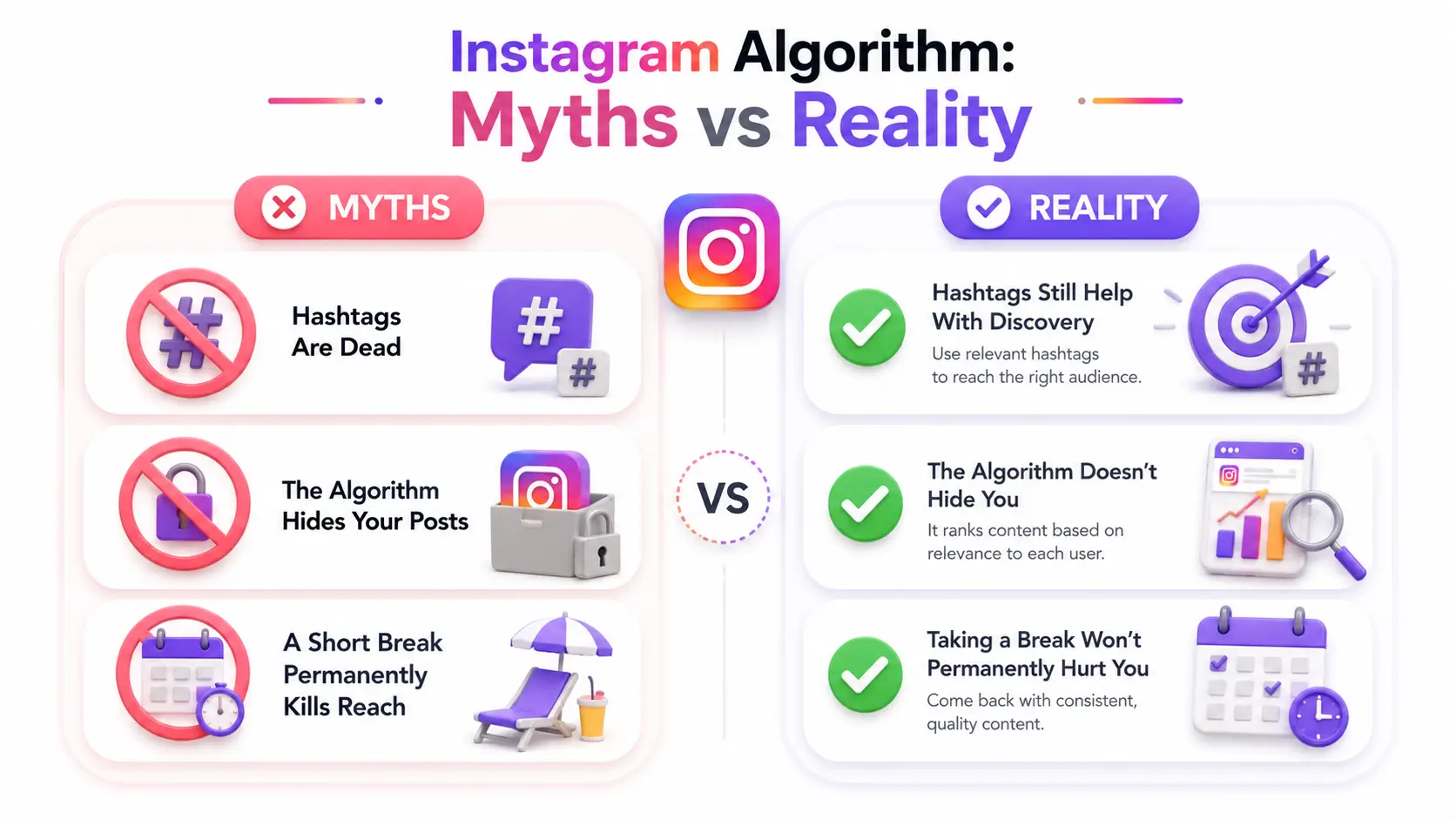
- “Hashtags are dead.” Not dead, just diminished. Instagram now relies primarily on analyzing the content and caption itself, so hashtags are a minor supporting signal rather than a growth strategy on their own.
- “The algorithm hides your posts from your followers.” Not every follower is guaranteed to see every post in chronological order. However, the algorithm isn’t deliberately suppressing your content; it ranks posts based on how relevant they’re predicted to be for each individual follower.
- “Taking a short break won’t permanently hurt your reach.” While a brief break is unlikely to cause lasting damage to your reach, extended inactivity can reduce how often the algorithm surfaces your account because recent engagement is one of the signals it considers.
Frequently Asked Questions
Q: What is the Instagram algorithm?
A: The Instagram algorithm isn’t a single system. It consists of multiple AI-powered ranking models that determine what each user sees across Feed, Reels, Stories, and Explore, using factors such as predicted interest and past behavior.
Q: How can I beat the Instagram algorithm in 2026?
A: You can’t “beat” it, but you can work with it: post original content consistently, prioritize Reels, encourage saves and shares, and avoid reposting content without adding your own value.
Q: Does Instagram still show posts in chronological order?
A: No. Instagram ranks posts by predicted relevance and engagement likelihood, not by post time, though recency is still one of many signals factored into ranking.
Q: Why is my Instagram reach dropping?
A: Reach often drops due to negative signals: followers skipping, hiding, or scrolling past your posts quickly, or from inconsistent posting, which reduces how often the algorithm surfaces your account.
Q: Do hashtags still help with Instagram reach?
A: Hashtags play a much smaller role than they used to. Instagram now relies mainly on content and caption analysis to understand topic relevance, making hashtags a minor supporting signal.
Q: Is the Reels algorithm different from the Feed algorithm?
A: Yes. Each surface Feed, Reels, Stories, Explore has its own ranking system with different priority signals, so a post optimized for the Feed won’t necessarily perform the same way as a Reel.
The Key Takeaways
The Instagram algorithm in 2026 isn’t a black box designed to work against you; it’s a set of prediction systems trying to show people more of what they already engage with. Once you understand that Feed, Reels, Stories, and Explore each play by their own rules, you can stop chasing tricks and start building a content strategy that actually fits how the platform works.


Pingback: Instagram Marketing For Small Businesses In Kerala (2026)