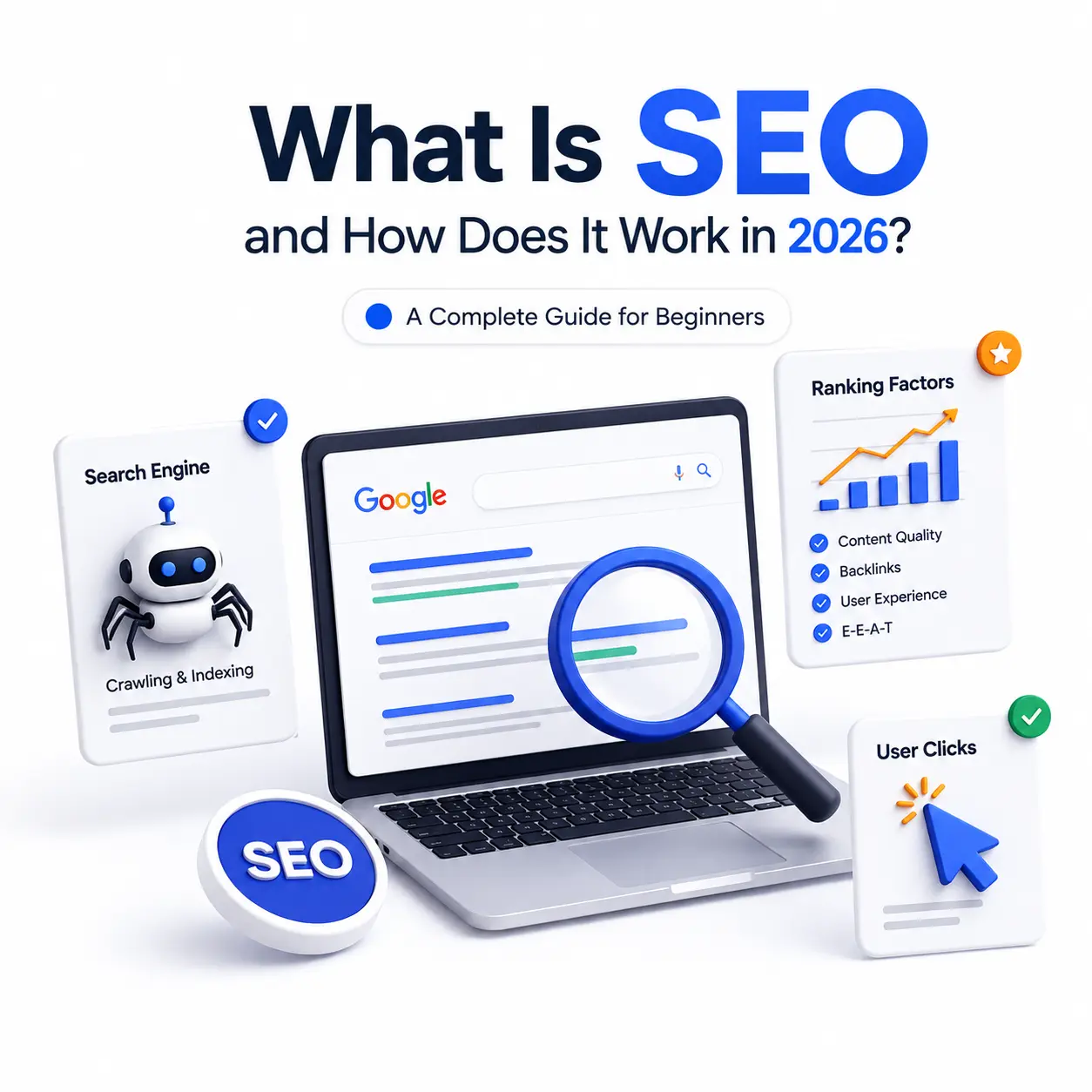
If you’ve searched “what is Search engine optimization” in 2026, you’ve probably noticed something: the answer isn’t as simple as it used to be. Search engine optimization still means improving your visibility in search results, but how that happens, and what “visibility” even means, has shifted more in the past two years than in the previous decade combined.
This guide breaks down what SEO actually is, how it works mechanically, and what’s genuinely different about doing it in 2026, including the rise of AI Overviews, zero-click search, and a parallel discipline called GEO that every intermediate marketer now needs to understand.
What Is SEO?
SEO, or search engine optimization, is the practice of improving a website so it ranks higher in search engine results, making it easier for people to find your content, products, or services without paying for ads. At its core, SEO is about matching what your site offers to what people are actually searching for, then convincing search engines that your page is the best, most trustworthy answer to that query.
It matters because organic search remains one of the highest-intent, lowest-cost channels available. Someone actively searching for a solution is closer to taking action than someone scrolling past a display ad. Search engine optimization earns that attention rather than renting it, which is why, even as the search landscape fragments across AI tools and traditional engines, the underlying goal hasn’t changed: be the most relevant, credible answer wherever people are looking.
How SEO Works: The Core Mechanics
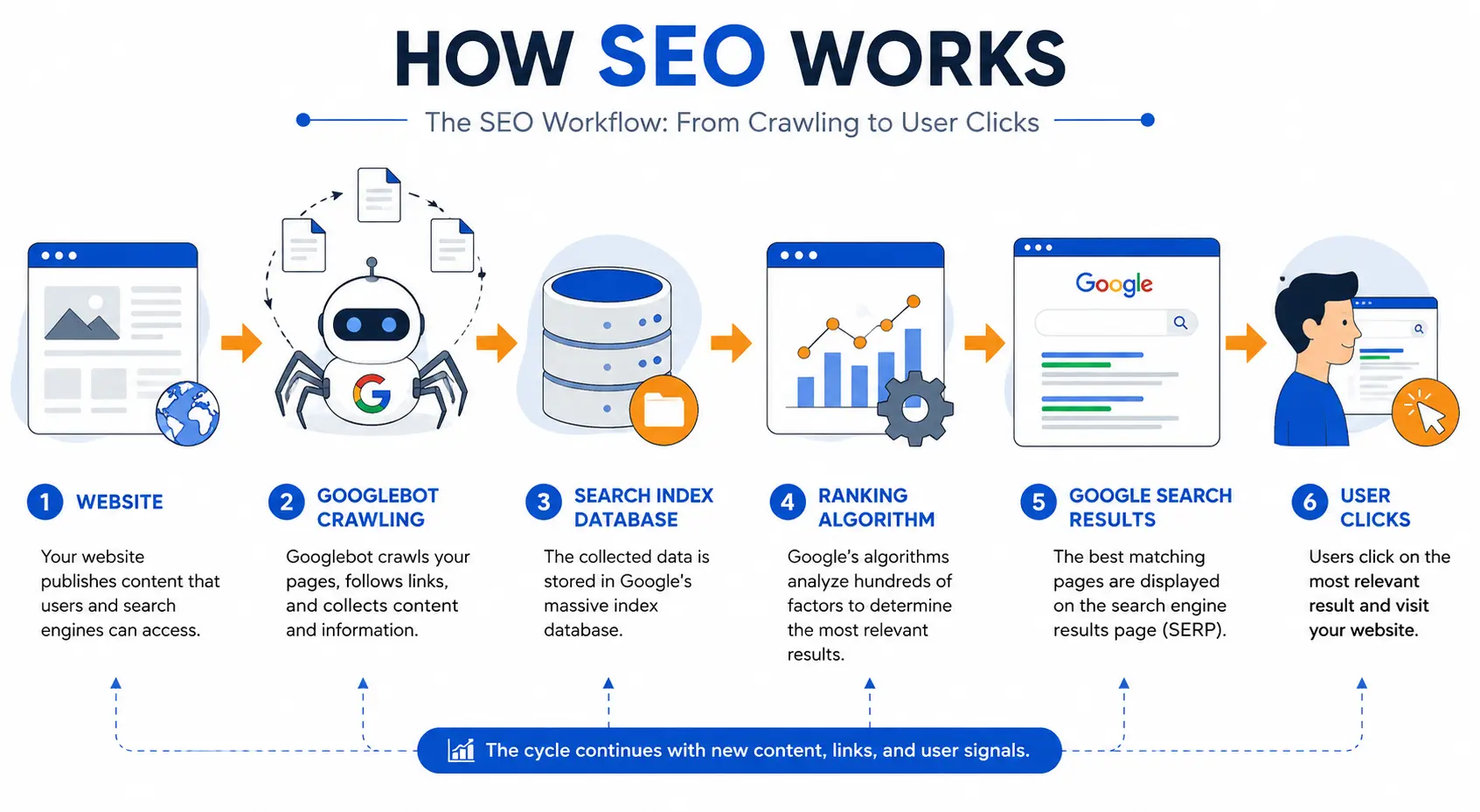
Search engines run on a three-step pipeline: crawling, indexing, and ranking. Understanding this pipeline is the foundation for everything else in SEO.
Crawling and Indexing
Search engines use automated bots (Google’s is called Googlebot) that continuously travel the web, following links from page to page. This process is called crawling. As bots crawl a page, they read its content, code, and structure, then store that information in a massive database, this process is called indexing. If a page isn’t indexed, it effectively doesn’t exist in search results, no matter how good the content is. This is why technical accessibility (clean site structure, working links, no accidental blocks in a robots.txt file) is the prerequisite for everything downstream.
Ranking Factors Google Uses in 2026
Once a page is indexed, ranking algorithms decide where it appears for relevant queries. Google has never published a complete list of ranking factors, but the categories that consistently matter include: content relevance and depth, page experience (loading speed, mobile usability, Core Web Vitals), backlink authority, and increasingly, signals tied to E-E-A-T (experience, expertise, authoritativeness, and trustworthiness). In 2026, content freshness and topical depth have taken on added weight, partly because these same signals influence whether a page gets cited inside AI-generated answers, not just whether it ranks as a blue link.
The Core Components of SEO
Search engine optimization is often broken into three or four working parts. A complete strategy addresses all of them together; neglecting one tends to cap the impact of the others.
On-Page SEO
This covers everything you control directly on a page: title tags, headers, keyword usage, internal linking, image alt text, and content quality itself. On-page SEO is where relevance gets established; it tells both users and search engines exactly what a page is about and why it deserves attention.
Technical SEO
Technical SEO ensures a site is fast, crawlable, and structurally sound. This includes site speed, mobile-friendliness, secure connections (HTTPS), clean URL structures, XML sitemaps, and structured data (schema markup). Technical health is invisible when it’s working and catastrophic when it’s not. A slow or broken site can undo months of content work.
Off-Page SEO & Link Building
Off-page SEO is primarily about earning backlinks from other credible sites linking to yours, which search engines treat as a vote of confidence. Quality matters far more than quantity: a handful of links from authoritative, topically relevant sites outweighs dozens from low-quality directories.
Content & E-E-A-T
Content is the substance search engines and readers are actually evaluating. E-E-A-T has become a central lens for judging that content: does it demonstrate real experience with the topic, genuine expertise, recognized authority, and trustworthy sourcing? This matters more in 2026 than ever, because the same credibility signals that earn rankings are also what determine whether AI systems choose to cite a page as a source.
How Search Has Changed Heading Into 2026
Search behavior has shifted dramatically, and any current explanation of SEO has to reckon with it directly.
The Rise of Zero-Click Search
A growing share of searches now end without a single click to any website. Over 58.5% of Google searches now end without a click, and as much as 83% of AI-generated answer queries are resolved directly on the results page. This means search engines are increasingly answering questions themselves on the results page, rather than sending users onward, which changes how “success” in Search engine optimization should be measured.
AI Overviews and What They Mean for Rankings
Google’s AI Overviews summarize information at the top of results pages, often before a user sees any traditional listing. Ranking well no longer guarantees a click, because the AI Overview may already contain the answer, sourced from your page or a competitor’s. This doesn’t make ranking irrelevant; pages still need to rank well to be eligible for citation, but it does mean visibility inside AI-generated summaries has become its own measurable goal, separate from traditional click-through traffic.
SEO vs. GEO: Optimizing for AI Search Engines
As AI tools like ChatGPT, Perplexity, and Google’s AI Mode have become mainstream ways people search, a related discipline has emerged alongside traditional SEO.
What Is GEO and Why It’s Different
GEO, or generative engine optimization, is the practice of structuring content so it’s more likely to be cited or summarized inside AI-generated answers, rather than simply ranked in a list of blue links. While SEO and GEO share a foundation, both reward clear, authoritative, well-structured content. GEO places extra weight on factors like content freshness, concise and quotable section structure, and being referenced across multiple credible sources, not just backlinks to one domain.
The two systems aren’t fully overlapping. Only about 14% of URLs and 21.9% of domains currently rank in both traditional search and AI-generated answer systems, which means most sites are, often unintentionally, optimized for only one visibility channel at a time.
How to Optimize Content for Both Systems
Practically, this means writing content that’s structured for skimmability (clear headers, direct answers early in each section, and well-organized data) while still maintaining the technical and authority fundamentals that traditional SEO has always rewarded. Treat GEO as an extension of solid SEO, not a replacement for it. A technically broken or thin page won’t get cited by an AI system any more than it would rank well in classic search.
Is SEO Still Worth It in 2026?
Yes, and the data backs this up more clearly than the “Search engine optimization is dead” narrative suggests. Search, in aggregate, hasn’t shrunk; it has diversified across more surfaces. Google still processes billions of searches daily, and organic visibility, whether as a ranked link or a cited AI source, remains one of the few channels where you earn attention rather than pay for every impression. The skill set required has expanded, not disappeared. Businesses that treat Search engine optimization as a checkbox exercise are losing ground, but businesses that adapt their approach to cover both traditional rankings and AI citation are finding real opportunity in a less crowded, less understood space.
How to Get Started With SEO (Beginner-Friendly Steps)
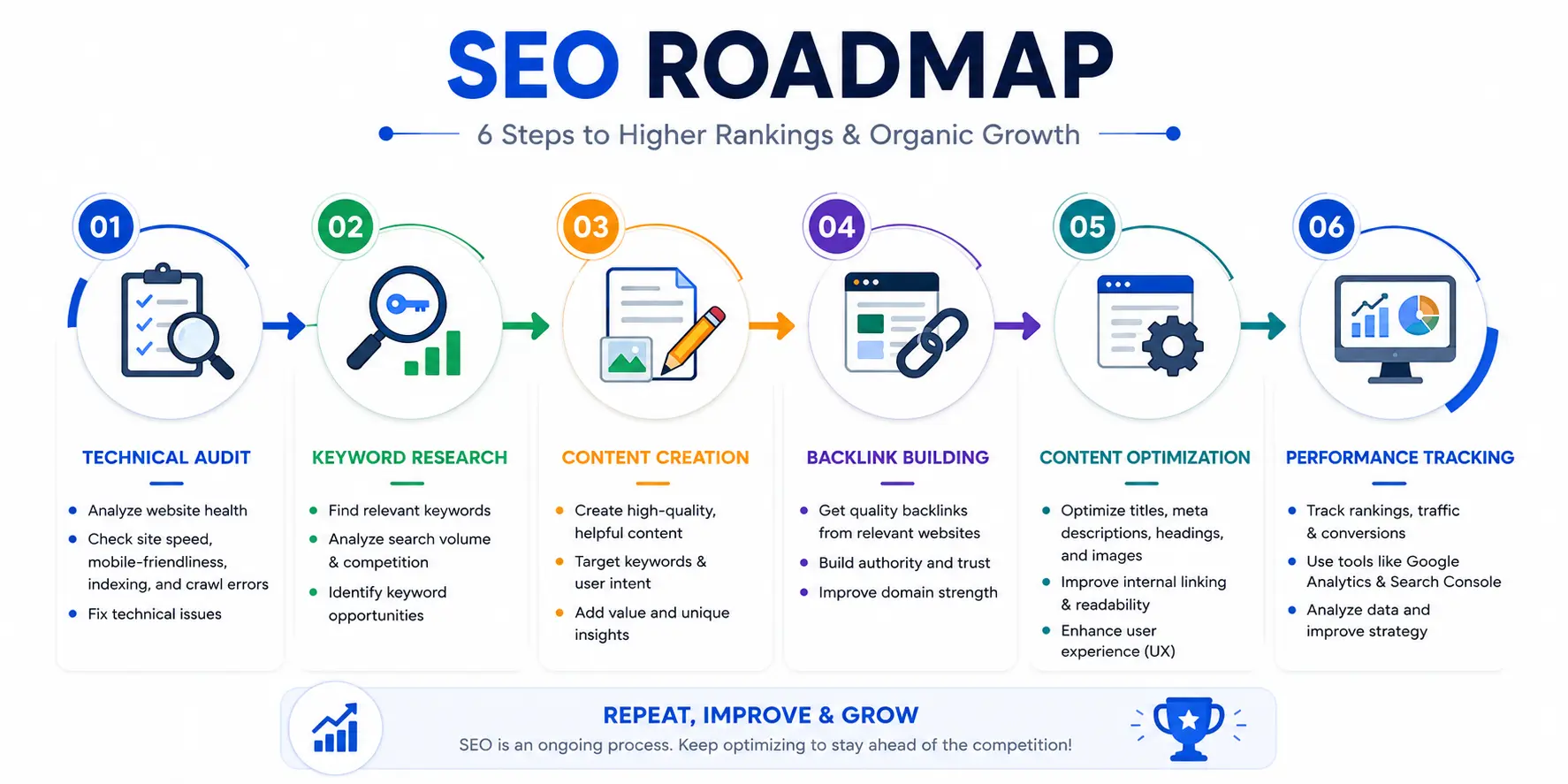
If you’re building or refreshing an SEO strategy for 2026, a practical starting sequence looks like this:
- Audit your technical foundation — confirm your site is crawlable, mobile-friendly, and reasonably fast before investing heavily in content.
- Identify real search intent — research not just keywords, but the actual questions and problems your audience is trying to solve.
- Build genuinely authoritative content — prioritize depth, clarity, and demonstrated expertise over keyword density.
- Earn quality backlinks — focus on relevance and credibility over volume.
- Structure content for both systems — clear headers, direct answers, and well-organized information that works for human readers, traditional rankings, and AI summarization alike.
- Track visibility beyond clicks — start monitoring whether your content is being cited in AI Overviews or AI chat tools, not just where it ranks in traditional results
FAQs About SEO in 2026
What is Search engine optimization in simple terms?
SEO (search engine optimization) is the practice of improving a website so it appears higher in search results, making it easier for people to find your content, products, or services without paying for ads. It involves technical fixes, quality content, and building credibility signals that search engines trust.
How Long Does It Take for SEO to Deliver Results?
Most sites see meaningful movement within 3–6 months, with significant results often taking 6–12 months. Timelines depend on competition, site authority, and content quality. SEO is a compounding, long-term strategy rather than an instant traffic source.
What’s the difference between SEO and GEO?
SEO optimizes for traditional search engine rankings and clicks, while GEO (generative engine optimization) focuses on getting cited or summarized inside AI-generated answers from tools like ChatGPT or Google’s AI Overviews. In 2026, most strategies need to address both.
Is SEO still relevant with the rise of AI search?
Yes. While zero-click searches have grown, AI-referred visitors tend to convert at meaningfully higher rates than average organic traffic, and being cited within AI answers still depends on strong SEO fundamentals like authority and technical health.
What are the three main types of Search engine optimization?
The three core types are on-page SEO (content and page elements), technical SEO (site speed, crawlability, structure), and off-page SEO (backlinks and authority signals). A complete strategy addresses all three together.
Do I Still Need SEO If I’m Running Paid Ads?
Yes, paid ads deliver traffic only while you’re paying, while SEO builds compounding, long-term visibility. Most effective strategies combine both, using ads for immediate results and SEO for sustainable, lower-cost growth over time.
Conclusion
SEO in 2026 is about more than just rankings—it’s about creating valuable, trustworthy content that performs across both traditional search engines and AI-powered search. By combining strong SEO fundamentals with GEO best practices, you can build long-term organic visibility and sustainable business growth.
If you want to master these skills, a Digital Marketing Course in Trivandrum can provide hands-on training in SEO, Google Ads, content marketing, and AI-driven digital marketing to help you succeed in today’s competitive digital landscape.


Pingback: What Is Ecommerce SEO? Beginner’s Guide For 2026
Pingback: What Is Email Marketing? A Beginner's Guide In 2026