Meta has rebuilt the system that decides which Facebook and Instagram ads get a chance to reach people. On 28 October 2026, Meta’s engineering team published details of the next generation of Andromeda, its AI ad retrieval engine. This guide explains the Meta Andromeda update in plain language: what Andromeda does, what changed in 2026, how it connects with Advantage+ and GEM, and what students, freelancers and performance marketers should adjust in their creative testing and campaign setup.
What Is Meta Andromeda?
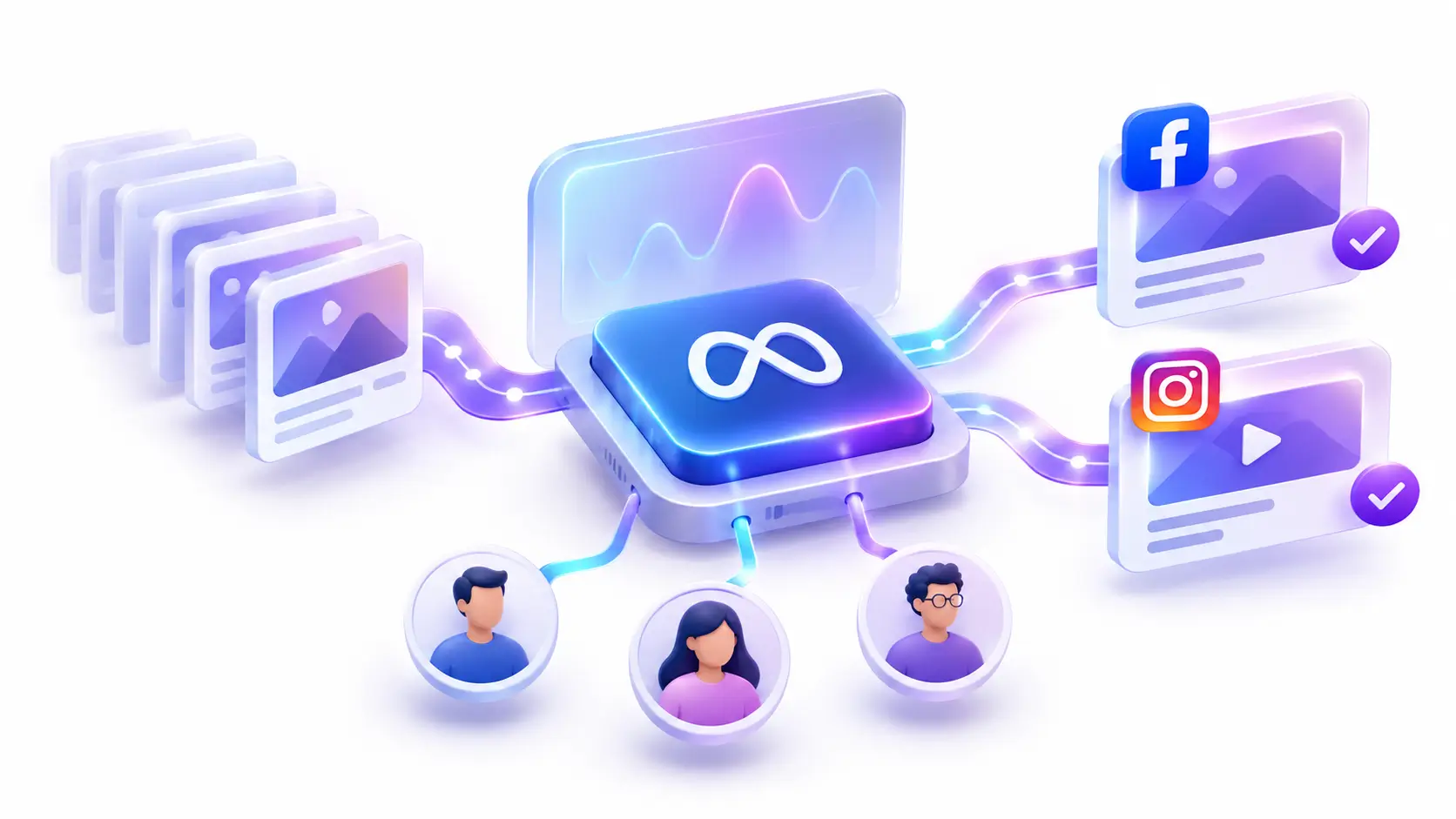
Meta Andromeda is Meta’s machine learning system for personalised ads retrieval. It is the first stage of the ad delivery pipeline. When someone opens Facebook or Instagram, Andromeda scans the huge pool of eligible ads and builds a short list of strong candidates for that person within milliseconds.
Meta first introduced Andromeda in December 2024 as the retrieval engine behind its Advantage+ automation suite. The 2026 version is a major rebuild of that same system, not a brand-new product.
The Three Stages of Meta Ad Delivery
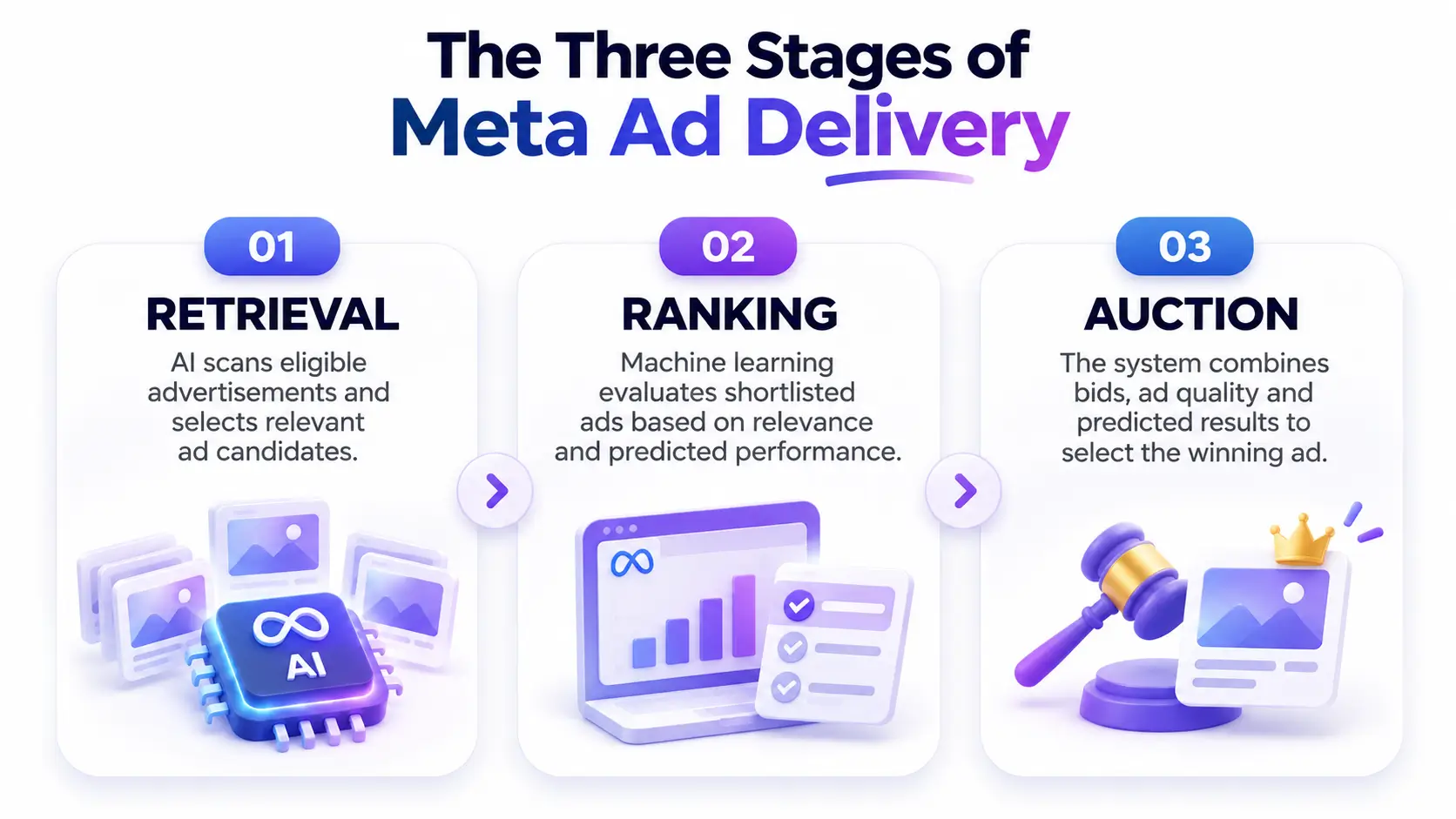
Every ad passes through three steps before it reaches a feed:
- Retrieval: Andromeda narrows a vast pool of eligible ads down to a manageable shortlist.
- Ranking: A more detailed ranking model scores each shortlisted ad on its likely relevance and outcome.
- Auction: The ad auction combines those predictions with bids and ad quality to pick the winner.
Why Retrieval Matters So Much
Retrieval works like a gatekeeper. If Andromeda does not shortlist your ad, it never reaches ranking, the auction or the user’s feed, no matter how good your bid strategy is. Meta’s own engineers note that small improvements at the retrieval stage can create large gains in advertiser value, which explains why the company invested so heavily in this rebuild.
What Changed in the 2026 Andromeda Upgrade?
Meta calls the new system “the 2026 Meta Andromeda update”. Many marketers and industry blogs call it Andromeda 2.0, but that is an informal label rather than an official product name. Some advertisers noticed delivery changes in early November and linked them to this release, yet Meta has not announced a separate November update or given advertisers a specific rollout date.
Scoring Every Eligible Ad
The headline change is scale. According to Meta’s official engineering announcement, the new pipeline processes more than one billion ads per second on a single GPU server and scores every eligible ad across Facebook and Instagram. Meta describes this as roughly 100 times the throughput of the 2024 system.
For advertisers, fewer good ads get filtered out because the system lacked time or computing power to evaluate them.
A Mixture-of-Experts Model Borrowed from Large Language Models
Meta redesigned the retrieval model using a mixture-of-experts (MoE) architecture, an approach popularised by large language models. In simple terms, the model contains many specialised sub-networks, called experts, and a routing layer activates only the most relevant ones for each user and ad.
The new design uses several specialised “user towers” that learn from signals such as past ad engagement, audience cohorts, language-model-derived meaning and activity across Meta’s apps. Meta says this model approaches ranking-level quality while using about 300 times less computation per prediction than the 2024 retrieval model.
Targeting and Scoring Now Run Together on the GPU
Earlier, targeting checks (index matching) and final shortlist selection ran on separate machines and passed data over the network. In the 2026 system, index matching, scoring and top-K selection all run on the same GPU server. Meta reports that this cut network traffic by around 100 times. Meta built and benchmarked parts of this pipeline with NVIDIA on Grace Hopper GH200 hardware.
The Performance Figure Meta Shared
Meta states that Andromeda has delivered a 2.4% increase in conversions on Facebook since 2025. Students should read this figure carefully. It comes from Meta alone, covers Facebook only, and arrives without a published baseline or test method. In its third-quarter 2026 results, Meta separately credited Andromeda improvements with a 1.4% conversion lift on Facebook. Treat both numbers as platform-level signals, not a promise for any single ad account.
Why Did Meta Rebuild Andromeda?
Generative AI creative tools changed the volume of ads on Meta’s platforms. Meta says these tools have helped advertisers create hundreds of millions of new ads, and it reported that nearly 10 million advertisers used its generative AI creative tools in the third quarter of 2026.
A larger ad pool needs a faster, smarter retrieval layer. The 2024 version could not apply ranking-quality models to that many ads at an acceptable cost, so Meta redesigned both the model and the hardware pipeline.
How Meta Andromeda Update Works with Advantage+ and GEM
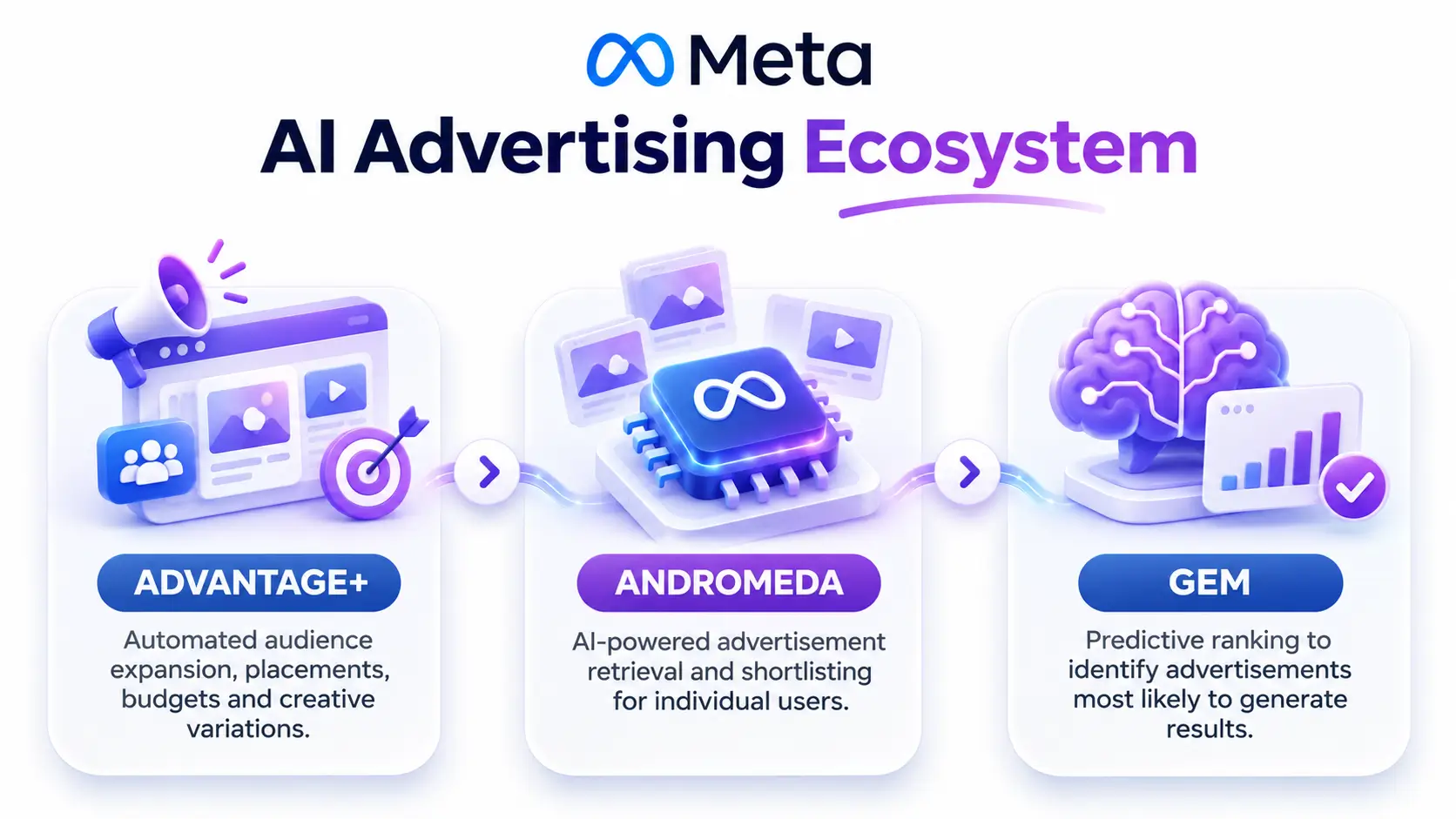
Andromeda does not work alone. It sits inside a larger AI advertising stack:
- Advantage+ automates audience expansion, budget allocation, placements and creative variations, which increases the number of eligible ads.
- Andromeda decides which of those ads make the shortlist for each person.
- GEM (Generative Ads Recommendation Model) works on the ranking side, predicting which shortlisted ad is most likely to drive a result.
A simple way to remember it: Andromeda decides what can be shown, and GEM helps decide what should be shown.
What the Meta Andromeda Update Means for Advertisers
There Is No Switch to Turn On
Advertisers will not find an Andromeda toggle, migration checklist or new report in Ads Manager. The changes happen automatically inside normal ad delivery. Any campaign delivering on Facebook or Instagram already runs through it.
Creative Now Carries More of the Targeting Load
Because Meta Andromeda update reads signals from the ads themselves and matches them to individual users, creative variety gives the system more options to work with. Practitioners widely report that near-identical ads, such as the same image with a different headline, add little value. Genuinely different concepts, formats, hooks and selling points give the system more ways to reach different people.
Signal Quality Still Shapes Results
Retrieval and ranking models learn from conversion data. A correctly configured Meta Pixel, the Conversions API and accurate event tracking help the system understand which users and ads lead to real outcomes. Poor tracking feeds weak signals into an increasingly automated system.
Practical Steps for Freelancers and Performance Marketers
You do not need to rebuild every account. Review your process instead:
- Plan distinct creative concepts. Build ads around different customer problems, emotions, formats and offers rather than small text tweaks.
- Mix formats. Test Reels, static images, carousels and user-generated content styles.
- Audit tracking. Check Pixel events, Conversions API setup and event match quality in Events Manager.
- Avoid panic edits. Early-November swings may come from seasonality, offers or tracking, not only the update.
- Test targeting with evidence. Meta has not set a universal rule to go broad or consolidate campaigns, so let account data guide those choices.
- Measure incrementality. Meta’s lift studies and A/B tests show whether ads create new conversions, not just reported ones.
What Digital Marketing Students Should Learn from This Update
The 2026 meta Andromeda update release shows where paid social advertising is heading. Manual audience tweaking matters less, while creative strategy, data quality and measurement matter more. Students who understand how retrieval, ranking and auctions connect will read campaign results with far more confidence.
If you are new to paid social, start with the basics of social media marketing before moving into Meta Ads strategy. Learners who prefer classroom training can join a digital marketing course in Trivandrum, while working professionals and freelancers can build these skills through an online digital marketing course that covers Meta Ads, tracking and creative testing.
Frequently Asked Questions
Is Andromeda 2.0 an official Meta product name?
No. Meta Andromeda update announcement refers to the next generation of Meta Andromeda or “the 2026 Meta Andromeda”. Andromeda 2.0 is an industry nickname.
Do I need to change any settings in Ads Manager?
No. Andromeda works automatically within Meta’s ad delivery system. There is no opt-in step.
Does the update affect Instagram ads too?
Yes. Meta says the 2026 system scores every eligible ad across both Facebook and Instagram.
Will the update lower my cost per result?
Meta has not promised lower costs for any specific account. Results still depend on your offer, creative, tracking, competition and seasonality.
Is detailed targeting useless now?
No. Targeting rules still apply during retrieval. Creative diversity simply plays a larger role in helping the system find the right people.
Key Takeaways for Marketers
The 2026 meta Andromeda update release makes Meta’s retrieval stage faster, larger and closer to ranking-level intelligence. It scores every eligible ad, uses a mixture-of-experts model and runs targeting and scoring together on GPUs. Advertisers cannot switch it on or off, but they can feed it better inputs through diverse creatives, clean tracking and disciplined testing.
Ready to Master Meta Ads and AI-Driven Marketing?
Understanding updates like the Meta Andromeda update is what separates a button-clicker from a true performance marketer. Learn Meta Ads, creative testing, tracking, and measurement hands-on with expert trainers in Kerala.
Enrol in the Certified Digital Marketing Associate Course in Kerala →